A wheel and tire package is not a menu where you choose a diameter, then choose whatever rubber looks right. The wheel controls the tire’s mounting diameter, supports its sidewall at a specific width and places the entire assembly near the brakes, suspension and fender. The tire adds its own width, sidewall height, load capacity and outer diameter. A package works when those choices agree with each other and with the vehicle.
That is why a size that sounds familiar, such as 19x9.5 with 255/35R19 tires, is a useful starting point but not a complete fitment answer. This guide explains the relationship in plain language, then gives you a practical order for comparing options. Use it to ask better questions before buying a set or planning a custom forged wheel.
Start with the two sizes that must agree
Wheel size is commonly written as 19x9.5. The first number is the nominal wheel diameter in inches. The second is the nominal width, measured at the bead seats where the tire mounts, not across the outer lips. Tire size might read 255/35R19. In that code, 255 is nominal section width in millimeters, 35 is sidewall height as a percentage of that width, R indicates radial construction and 19 is the rim diameter in inches.
The wheel diameter and the tire’s rim-diameter number have to match. A 255/35R19 tire mounts on a 19-inch wheel, not an 18- or 20-inch wheel. Michelin’s tire-size explanation breaks down the same format and identifies the final number as rim diameter. That match is the easy part. Wheel width, tire approval, outer diameter and vehicle clearance still decide whether the full package is appropriate.
Wheel width shapes the tire, it does not just hold it
Every tire model and size has an approved rim-width range. Stay inside that published range for the exact tire you intend to use. It is the manufacturer’s compatibility window, not a styling suggestion. The wheel width affects how the sidewall stands, how the tire measures and how much room the assembly occupies.
A narrower approved wheel tends to pull the sidewalls inward. A wider approved wheel supports them more upright. That can change steering response, ride feel, appearance and the actual section width you need to clear. Tire Rack illustrates the principle with a P205/60R15 tire whose section width changes as rim width changes within its approved range. Its tire-specification guide also explains that the industry measuring rim is the standardized width used to establish published dimensions.
Do not treat the numbers on a tire’s sidewall as the guaranteed installed width on every wheel. The marked 255 is a nominal classification, not a promise that every 255 tire will measure the same across brands, constructions and wheel widths. The exact manufacturer data is the right source when a few millimeters matter near a strut, a fender liner or a brake duct.
Read the tire sidewall as a package, not a width alone
It is tempting to call a 255 tire “wider” than a 245 and stop there. But the middle number changes the sidewall height. A 255/35R19 and 255/40R19 use the same wheel diameter and nominal section width, yet the 40-series tire has a taller sidewall and a larger outer diameter. A 245/40R19 may have a different overall diameter again, despite being narrower.
That outer diameter influences the room above the tire, the effective gearing and the systems that read wheel speed. The U.S. Tire Manufacturers Association advises that replacement combinations use approved rim widths and that changed sizes be checked for clearance at every wheel position, including full suspension travel and full steering lock. Its passenger and light-truck tire service guide also notes that diameter changes can affect speedometer, odometer, ABS, tire-pressure monitoring, AWD and traction-control systems.
| What to compare | Why it matters | Where to verify |
|---|---|---|
| Wheel diameter | Must match the tire’s final size number. | Wheel marking and tire sidewall. |
| Wheel width | Changes tire shape and must be within the tire’s approved range. | Exact tire manufacturer specification. |
| Overall tire diameter | Affects clearance and vehicle-system considerations. | Tire data and vehicle guidance. |
| Offset and profile | Places the inner and outer edges near suspension, brakes and fenders. | Fitment comparison and physical vehicle checks. |
Use plus sizing carefully
Plus sizing usually means moving to a larger wheel diameter while reducing tire sidewall height so the outside diameter stays close to the original package. For example, a vehicle may move from an 18-inch wheel to a 19-inch wheel while using a lower-profile tire. The visual result can be sharper, and steering response may feel more immediate, but there is less sidewall available to absorb rough pavement.
Keeping outside diameter near the vehicle’s intended range is only one part of the decision. The tire still needs the correct load index and speed rating, and the wheel still needs the right load capacity. Low-profile tires can be more exposed to pothole and curb damage. Wider tires can require more room on the inside or outside of the wheel well. Treat a plus-size plan as a full fitment change, not a cosmetic swap.
Why a generic wheel-and-tire chart is only a starting point
Charts can help you understand the relationship between diameter, wheel width and tire size, but they cannot certify a package for every vehicle. A 255-width tire can be built differently from one manufacturer to another. Its actual section width, tread width and outer diameter can vary, and its approved rim-width range can be different from another 255 tire. That difference matters more when the fitment is close.
Vehicle changes matter just as much. Lowering springs, coilovers, larger brakes, alignment settings, fender modifications and even a different tire construction can alter the clearance picture. A size that clears a stock car may not clear after the suspension moves through its travel. A package that clears in a straight line may still touch near full steering lock.
Use a chart to form a short list, then verify the exact components. Record the tire brand, model and size, the wheel diameter and width, the proposed offset and the vehicle details. This keeps the discussion tied to a real assembly instead of a loose collection of numbers. It also makes it much easier to recognize when one change, such as a wider tire, needs a corresponding adjustment somewhere else. The goal is not to make a chart approve a build, it is to make sure the right questions are answered before the parts arrive and the vehicle is asked to carry the package.
Offset decides where the package sits
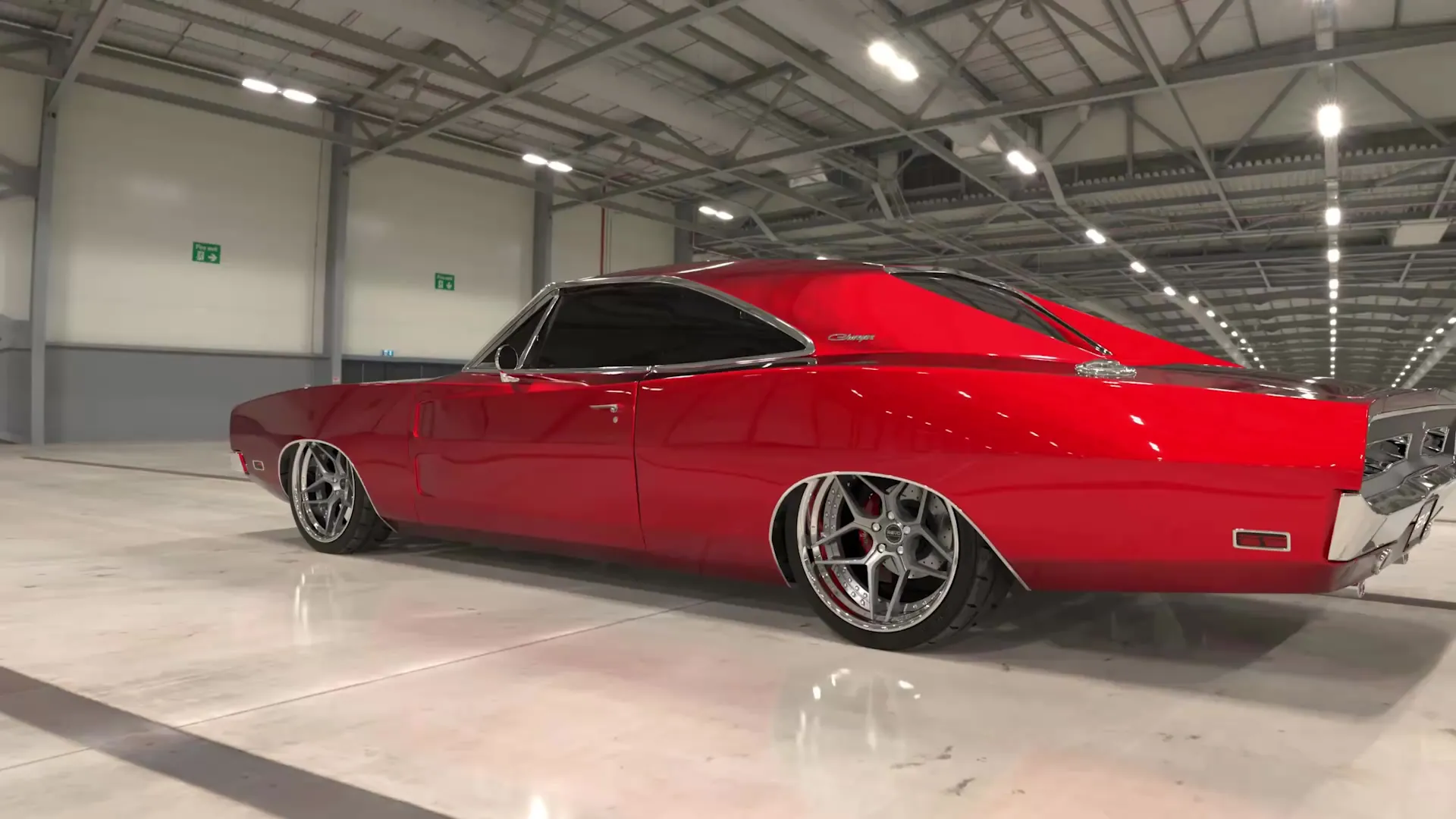
Wheel width and tire size describe the assembly. Offset determines where that assembly lands relative to the hub. A wider wheel with the same offset moves both edges farther out from the wheel centerline. A change in offset can move the entire wheel and tire inward or outward. That is why a wheel can be perfect on paper for tire diameter and rim width, then still contact a strut, caliper, fender or liner.
Before you assume a new wheel will fit, compare the current and proposed width and offset with REVO’s offset and backspacing calculator. It gives you a clearer starting picture of inside and outside movement. Then account for the candidate tire’s real dimensions, brake package, ride height, alignment, suspension movement and steering lock. REVO’s offset versus backspacing guide explains why width and position need to be read together.
A simple order for planning a wheel and tire package
- Start with the vehicle. Confirm year, make, model, trim, brake package, drivetrain, suspension and intended use. Factory recommendations and the tire placard are references, not details to skip.
- Choose the wheel diameter and design direction. Make sure the diameter has room for the brakes and the wheel profile supports the caliper. Browse the Wheel Collection for a design starting point.
- Choose a tire size that matches that wheel diameter. Then look up the exact tire’s approved rim-width range, load index and speed rating.
- Compare real dimensions. Check section width, overall diameter, wheel width and offset. Do not compare only the markings in a marketplace listing.
- Check the vehicle at full movement. Consider inner clearance, outer clearance, brake clearance, steering lock and suspension compression. A parked car does not show every potential contact point.
For a staggered setup, repeat the exercise for front and rear. A staggered package may use different wheel widths, offsets and tire sizes by axle. Those choices should preserve the vehicle’s intended operating requirements, especially on performance and AWD applications. Do not assume that a rear tire choice is transferable to the front just because the wheel diameter matches.
How REVO turns a tire plan into a wheel specification
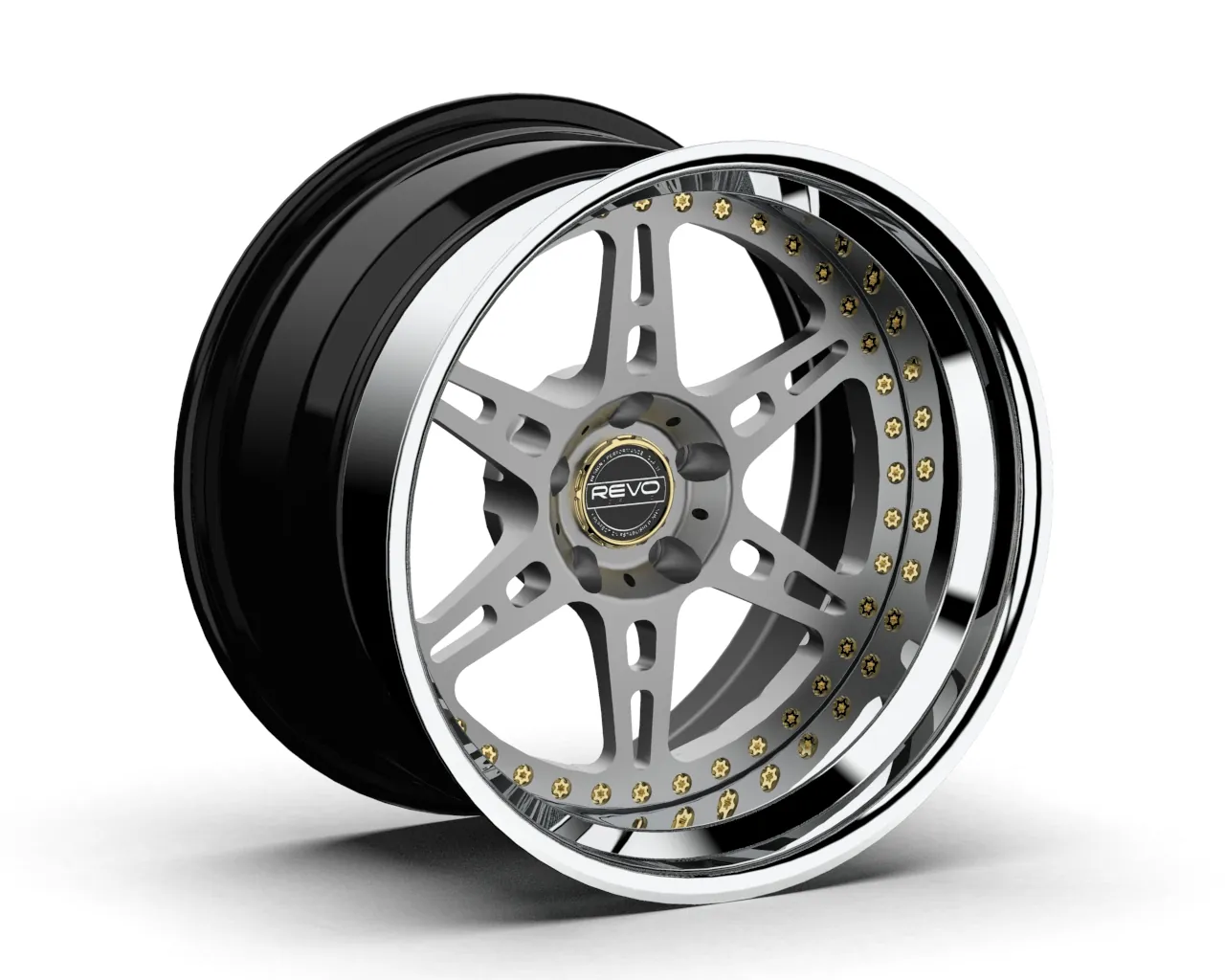
A custom wheel should start with the complete vehicle, then work toward the design. REVO considers the brakes, tire plan, ride height, intended use and the look you want before setting diameter, width, offset, center bore, bolt pattern and profile. That process is valuable because it keeps the tire from becoming an afterthought once the wheel has already been chosen.
If you are beginning a build, bring the current wheel and tire size, the tire size you are considering and any suspension or brake changes. REVO can use those details to shape a starting specification around the vehicle. When you are ready, use the fitment quote to share the build and the direction you want to take it.
Frequently asked questions
Does the tire diameter have to match the wheel diameter?
Yes. The last number in a passenger tire size is the wheel diameter in inches, so a 255/35R19 tire requires a 19-inch wheel. Matching the diameter is necessary, but it does not confirm that the tire suits the wheel width or the vehicle.
How do I know if a tire fits my wheel width?
Look up the exact tire model and size in the tire manufacturer’s specifications, then use its approved rim-width range. Do not rely on a generic rule of thumb because construction, load rating and intended use can change the approved range.
Does a wider wheel make the tire wider?
It can. Within the approved rim-width range, the same tire can measure differently on a wider or narrower wheel. That can change sidewall shape and the clearance you need to check.
Can I use a different tire size with the same wheel?
Sometimes, provided the wheel diameter matches and the exact tire is approved for the wheel width. You still need to confirm load capacity, overall diameter, brake and suspension clearance, fender clearance and any vehicle-specific requirements.
What should I send for a custom wheel and tire quote?
Send the year, make, model and trim, brake package, suspension details, current wheel and tire size, desired tire size, intended use and photos if there are clearance concerns. That gives the fitment conversation a real starting point.