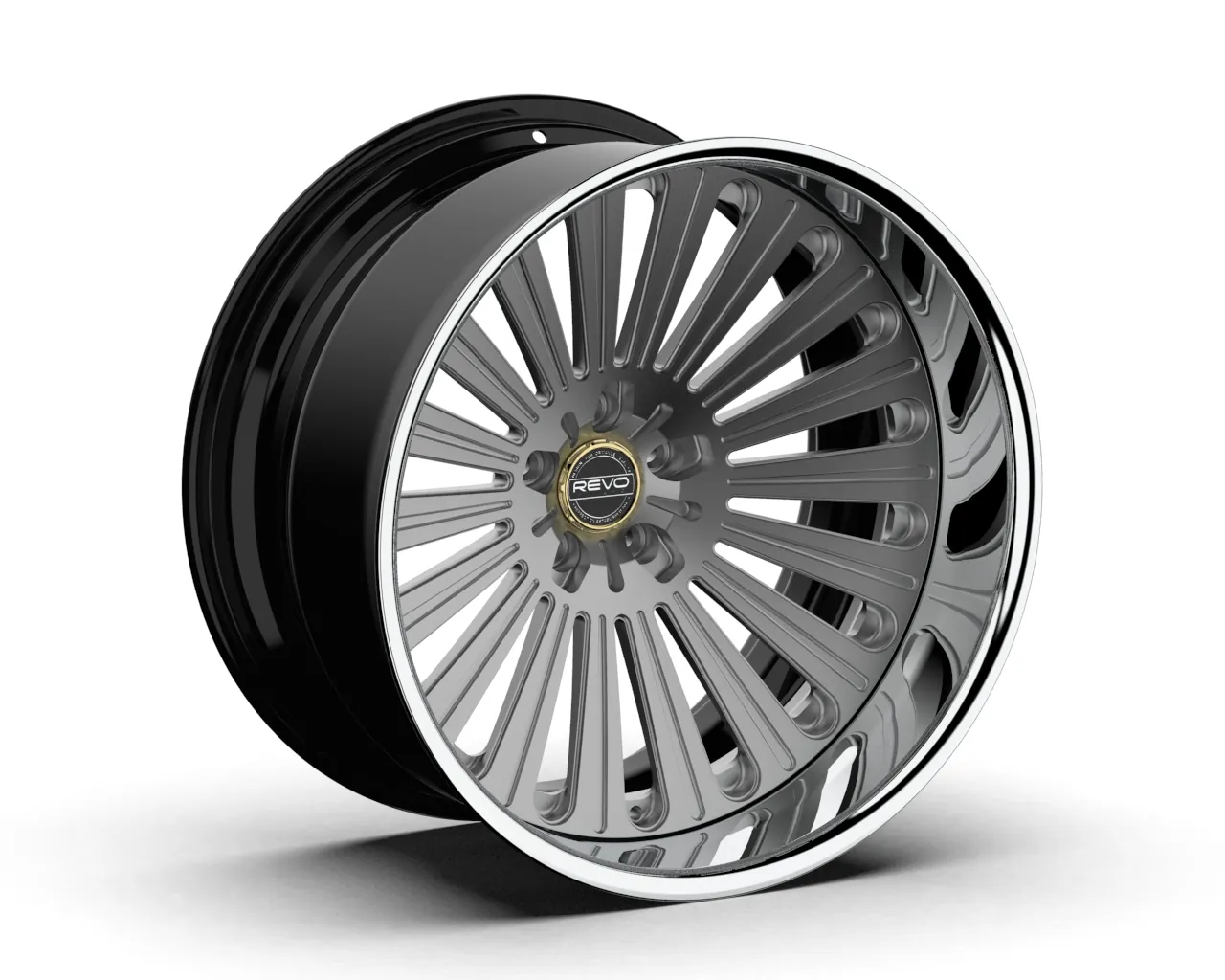
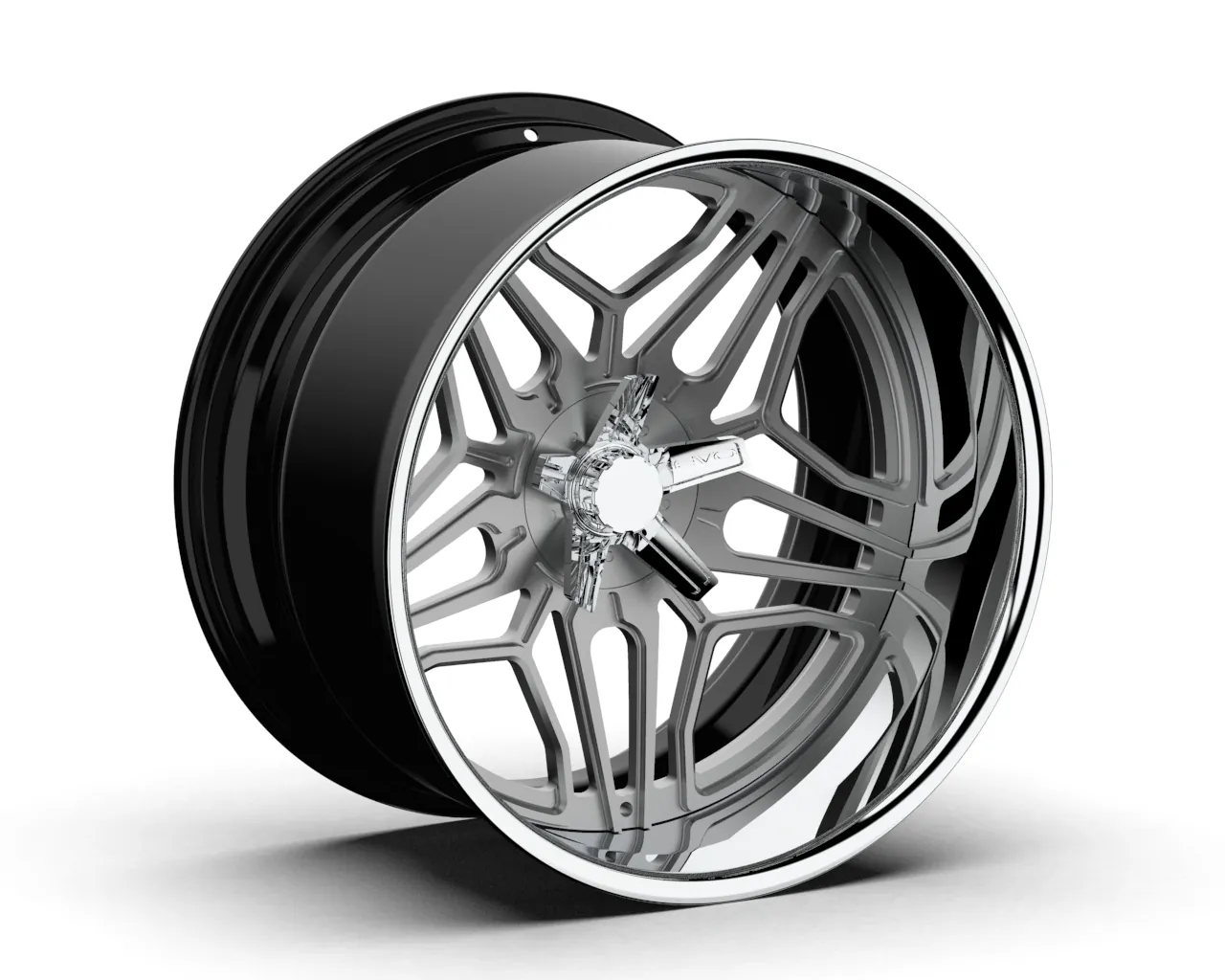
Wheel fitment is often reduced to bolt pattern, diameter and offset. Those details matter, but the center bore is just as fundamental. It is the opening at the back of the wheel that fits over the raised locating lip at the center of the vehicle hub. When the relationship is right, the wheel seats flat and the mounting system starts from the correct position.
The center bore does not tell you whether a wheel will clear the brakes, sit at the right position or work with the tire you want. It does tell you whether the wheel can register properly at the hub, which is why it belongs on the same checklist as bolt pattern, hardware, width, offset and spoke clearance. Here is what the measurement means, how to check it and where it fits into a real custom-wheel decision.
What wheel center bore means
The wheel center bore is the machined circular opening in the mounting pad. The vehicle hub has a corresponding raised section, often called the hub pilot. The bore must be large enough to pass over that pilot, and a vehicle-specific wheel is usually made to match it closely.
That close relationship is commonly called hub-centric fitment. It gives the wheel a positive, repeatable location on the hub before the lug hardware is tightened. Tire Rack’s wheel-fitment overview describes how wheel dimensions work as a system, which is the useful mindset here. A wheel is not compatible because one number matches. Every mounting and clearance dimension has to work together.
Center-bore sizes are normally given in millimeters. A wheel listing might show a 66.6 mm, 72.6 mm or 73.1 mm bore, for example. That number is not an aesthetic detail and it is not interchangeable with bolt pattern. Two wheels can both use a 5x114.3 bolt pattern yet have different center bores, so they may not register on the same vehicle hub in the same way.
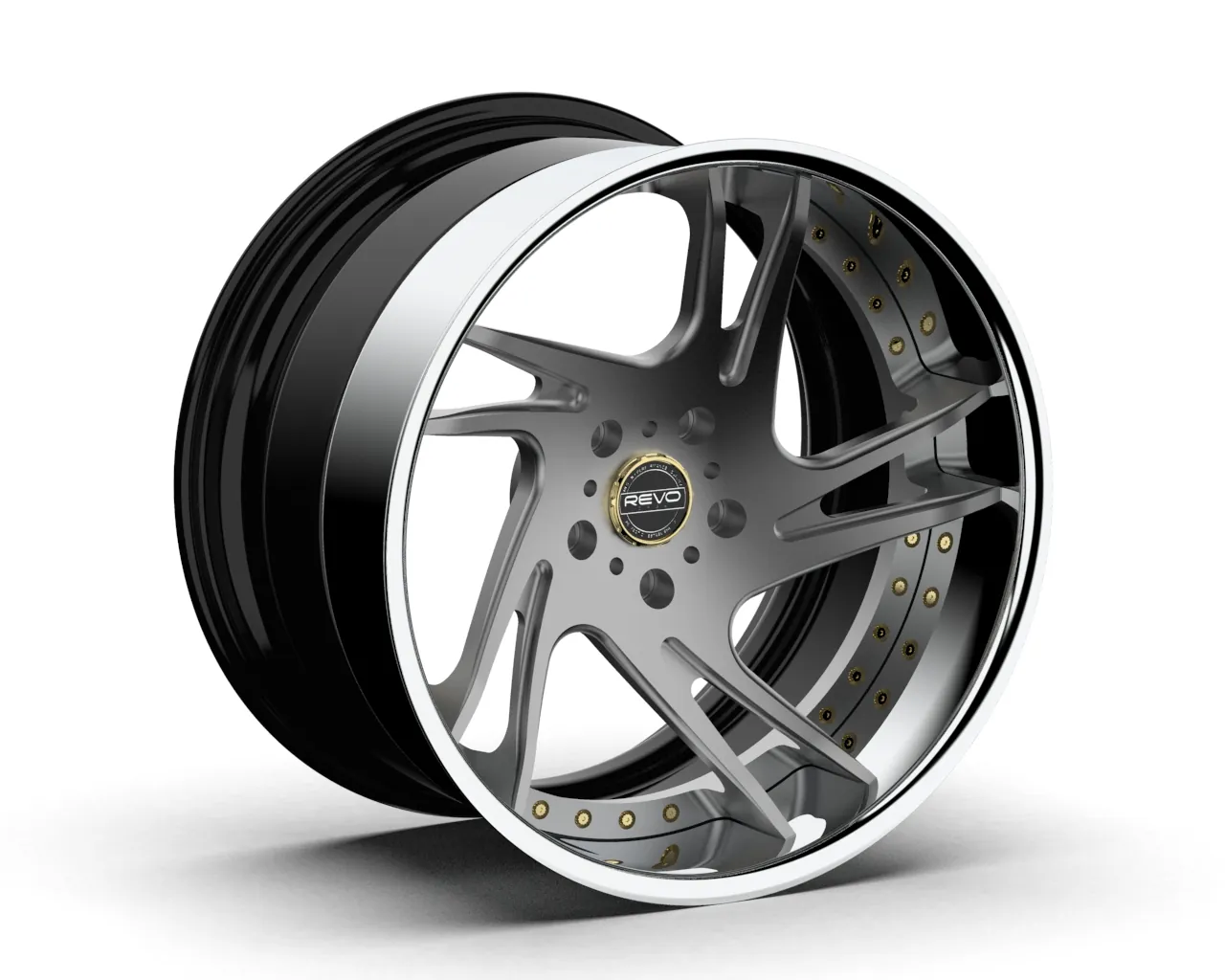
Center bore, bolt pattern and lug hardware each do a different job
It helps to separate the three mounting questions. The bolt pattern tells you whether the holes in the wheel line up with the vehicle’s studs or bolt locations. The center bore tells you whether the wheel can locate over the hub pilot. The lug hardware clamps the wheel to the hub with the correct seat shape and tightening specification.
Matching one of those dimensions does not settle the other two. A wheel can have the correct bolt pattern but too small a center bore. It can fit over the hub but use hardware with the wrong taper or ball seat. It can mount with the correct pattern and bore while still lacking the spoke profile for a larger brake caliper. That is why fitment is a sequence of checks, not a single number copied from a listing.
Start with the exact vehicle, then verify the pattern. REVO’s wheel bolt-pattern guide explains how to read and measure that first dimension. From there, center bore and hardware confirm how the wheel meets the hub, while width and offset decide how the wheel and tire package uses the room around the brakes, suspension and fender.
How to find your vehicle’s center-bore specification
The safest starting point is the vehicle manufacturer’s documented wheel specification for the exact year, model and trim. A factory parts catalog, owner documentation or a reliable vehicle-specific fitment source can give you the hub-bore size. Do not assume a shared platform, a similar-looking trim or a wheel from the same brand uses the same measurement.
When you are checking an existing wheel, look on the back near the mounting pad. The bore size may be cast, stamped or included in a manufacturer specification. A clear marking is helpful, but it should still be considered in context. Wheels can be refinished, repaired or modified, and a listing can be incomplete.
You can also measure the opening with a caliper. Measure across the inside diameter of the wheel’s center bore rather than the outer edge of the cap opening. Be precise. A tape measure is fine for a rough check, but it is not the right tool for deciding whether two bore sizes are close enough. They either match the requirement or they need a properly considered solution.
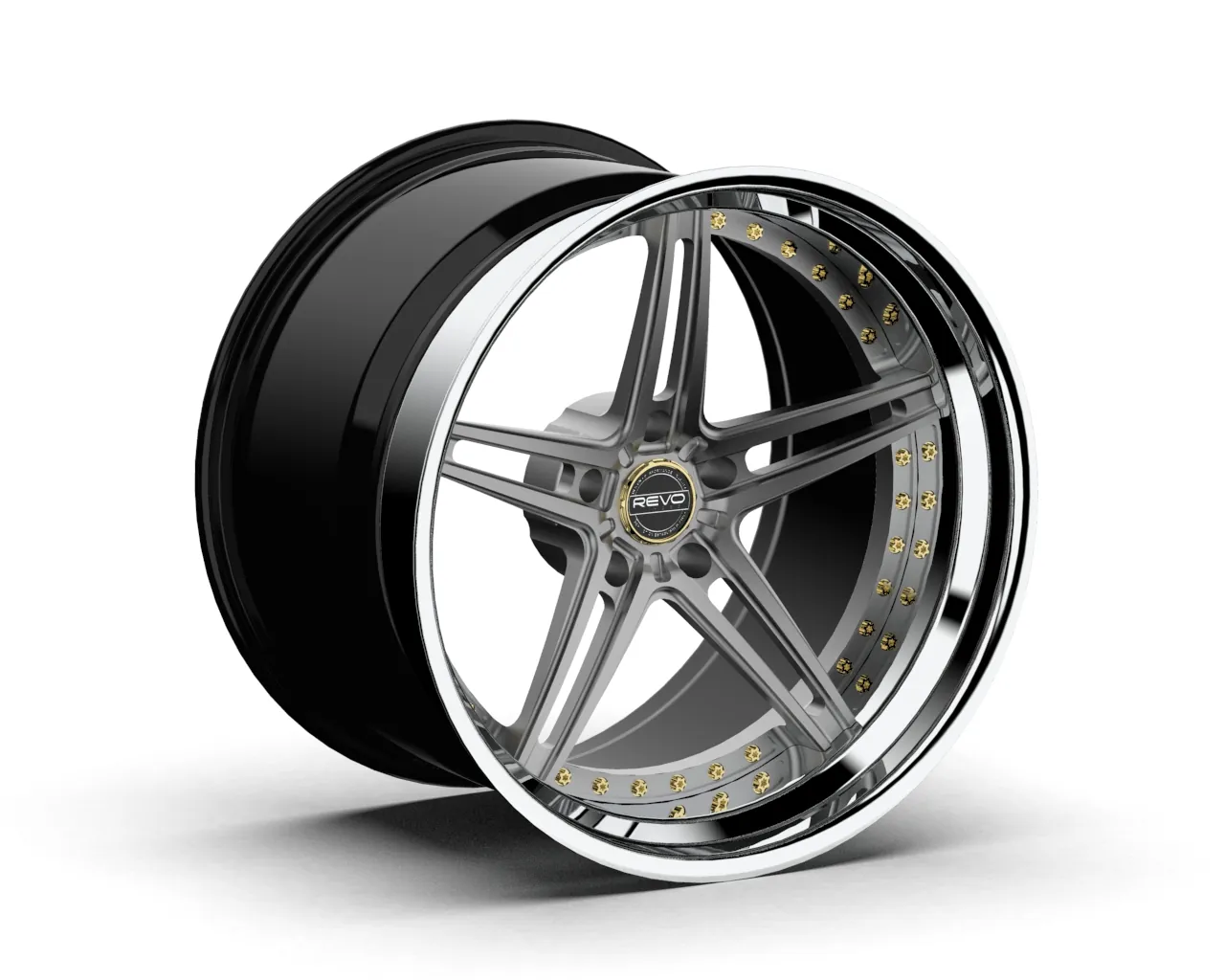
What happens when the center bore is too small or too large
A wheel with a center bore smaller than the hub pilot will not fit over the hub. That is a hard stop. Do not force the wheel into place or treat machining the bore as a casual adjustment. The mounting area is part of the wheel’s engineering, and any modification should come only with explicit guidance from the wheel manufacturer.
A wheel with a larger bore can sometimes be used with a correctly sized hub-centric ring, depending on the wheel, vehicle and hardware arrangement. The ring fills the gap between the hub pilot and the wheel bore, helping the wheel locate consistently during installation. It needs to be dimensionally correct on both sides, clean, undamaged and appropriate for the application.
A larger bore is not automatically a problem, and a hub-centric ring is not a universal shortcut. It cannot correct a wrong bolt pattern, poor brake clearance, the wrong lug seat, excessive wheel load or an unsuitable offset. It should be treated as one precise part of a compatible wheel package, not as permission to make an incompatible wheel work.
Why hub-centric fitment matters in practice
The wheel-hub relationship affects how confidently the wheel can be installed and serviced. A wheel that locates cleanly at the hub is easier to seat squarely before the hardware is tightened. That repeatability matters when you are working with a performance car, a vehicle with big brakes, a heavy truck or any build where several fitment details are already close.
It also keeps the inspection process simple. When the wheel is specified around the car, there is less ambiguity about which ring, hardware or workaround is supposed to be in place. The installer can focus on the normal essentials: clean mounting surfaces, the correct lug hardware, manufacturer torque guidance and a wheel-and-tire package that clears throughout steering and suspension travel.
For custom wheels, a vehicle-specific center bore is part of building the right answer from the start. It sits alongside the dimensions that make the visual result possible, including the face profile, brake clearance, barrel choice, width and offset. REVO’s construction guide shows why those choices are connected, especially when a build needs more than an off-the-shelf diameter and finish.
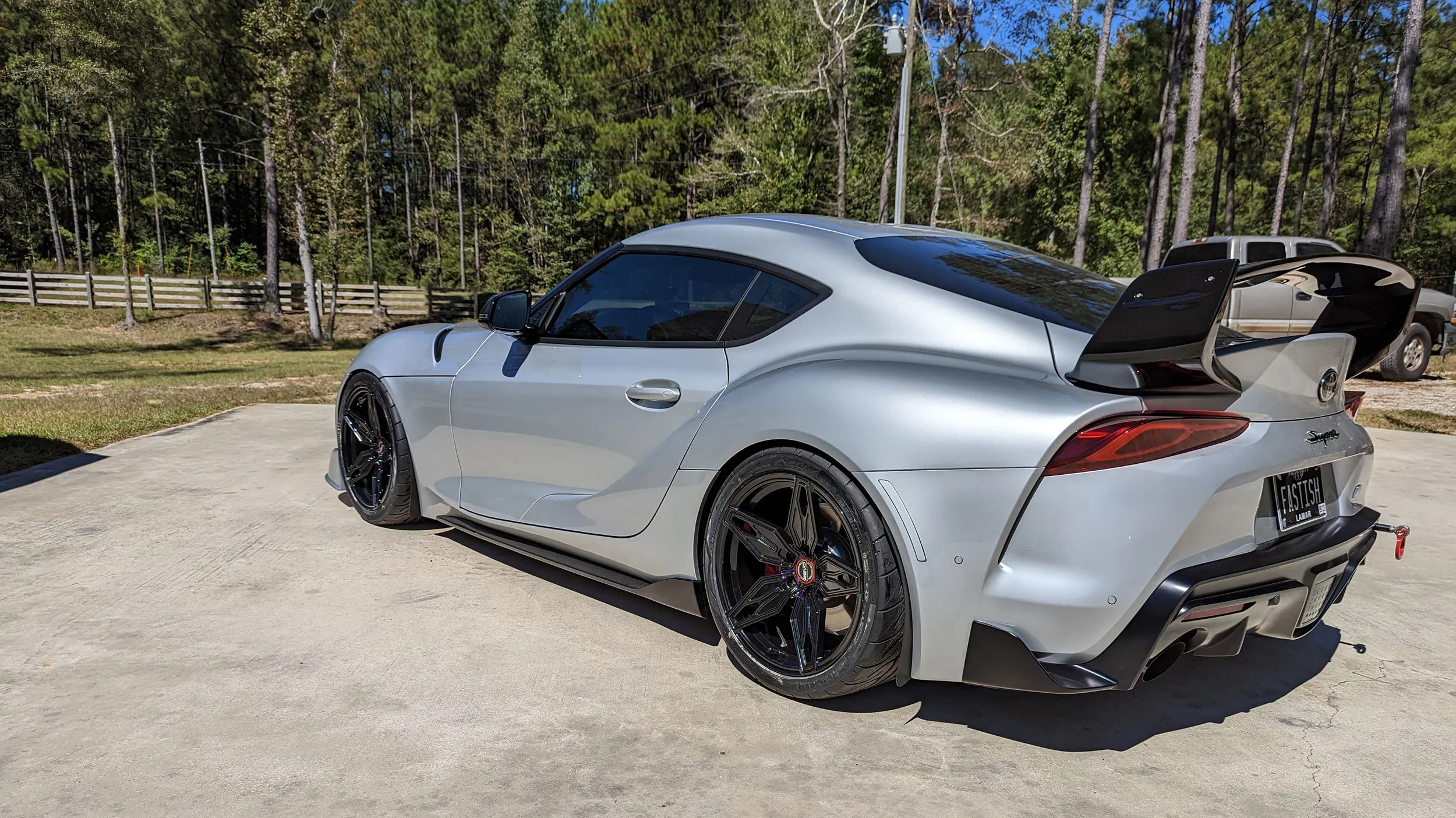
Do not mistake a hub ring for a complete fitment solution
Hub rings get discussed most often when an aftermarket wheel uses a larger, common bore size to fit multiple vehicles. That can be a practical manufacturing approach, but it moves more responsibility into the fitment process. The ring must match the vehicle hub and the wheel bore exactly, while the wheel still needs the right pattern, hardware, brakes, tires and load capability.
Material choice and environment matter as well. A ring that sees road salt, heat, repeated wheel changes or corrosion should be inspected rather than forgotten. Clean, flat hub and wheel mounting surfaces are just as important. Adding a correctly sized part to dirty or damaged mating surfaces does not create a precise installation.
For a vehicle that is lowered, runs wider tires, has a brake conversion or needs a more aggressive stance, the right conversation gets broader, not narrower. The center bore still matters, but it is only one part of the same specification that controls where the wheel sits and what it clears. The wheel-offset measurement guide is the next useful reference when you are comparing how those dimensional changes move the wheel inward or outward.
A practical check when the wheel is installed
Before final tightening, the wheel should sit flat against a clean hub mounting face without being held off by rust, debris, a damaged ring or an incorrect center cap. Look through the wheel opening and make sure the wheel is seated evenly. There should not be a visible gap at the mounting surface or a need to pull the wheel into place with the lug hardware.
Use the vehicle manufacturer’s tightening sequence and torque specification for the correct hardware, then recheck it in the normal service interval recommended for the vehicle and wheel. The National Highway Traffic Safety Administration’s tire safety guidance is a useful reminder that wheel and tire work is not a cosmetic detail. Inflation, loading, condition and proper installation all affect how the vehicle behaves on the road.
After installation, pay attention to new vibration, rubbing, a clicking sound or a wheel that does not appear to sit squarely. Those are not symptoms to drive through while hoping they settle down. Stop and have the mounting, hardware and full wheel-and-tire clearance checked. A correct center bore is one part of a reliable installation, but it cannot make up for a problem elsewhere in the package.
Center bore checks before ordering wheels
Before choosing a wheel, collect the exact vehicle year, make, model and trim. Confirm the bolt pattern and documented hub bore. Then record brake changes, suspension changes, tire size, intended use and the fitment direction you want. A street car, track car, truck that works and show build can need very different answers even when the hub dimensions begin the same way.
Next, compare the prospective wheel’s bore, bolt pattern and lug-seat design against the vehicle requirement. A manufacturer’s wheel specification should state the bore and mounting details clearly. If an unfamiliar wheel is missing those specifications, it is not ready to be treated as a dependable option.
Finally, account for wheel width, offset and brake shape before a purchase is final. A wheel that locates correctly on the hub still needs room at the caliper, strut, steering components and bodywork. REVO’s offset versus backspacing guide breaks down the measurements that help you compare that available space rather than guessing from a photo.
How REVO uses center bore in a custom wheel specification
REVO starts with the vehicle because the hub is only one part of the decision. The year, make, model, brakes, suspension, tire plan and intended use establish the non-negotiables. From there, the center bore, bolt pattern and hardware can be planned with the dimensions that shape clearance, stance and wheel design.
That approach gives the final specification a purpose. A wheel can be built around a clean one-piece street look, a deep-lip three-piece build, a track-focused package or a truck that has real work to do, without treating the mounting interface as an afterthought. Browse the REVO wheel collection for a design direction, then use the fitment quote form with the details of your actual vehicle. Good wheel fitment begins at the hub and ends with a package that belongs on the car.
Frequently asked questions
Does a wheel center bore have to match the hub exactly?
A wheel with a smaller center bore will not fit over the hub. A wheel with a larger center bore may be usable when the mounting system and a correctly sized hub-centric ring are appropriate, but the complete wheel, hardware and vehicle fitment still need to be confirmed.
Can lug nuts center a wheel?
The lug hardware clamps the wheel to the hub, but it should not be treated as a substitute for confirming how the wheel registers on the hub. The correct wheel specification considers the hub bore, bolt pattern, hardware seat and all clearance requirements together.
What happens if the center bore is too small?
The wheel will not seat over the hub. Do not force it or enlarge the bore without engineering guidance from the wheel manufacturer. Removing material can affect the mounting interface and does not solve the other fitment requirements.
Are hub-centric rings always needed?
No. A wheel designed with the vehicle’s correct center bore does not need an adapter ring. Rings are considered when a compatible wheel has a larger bore than the hub, but the size, material and application must be right for that specific combination.
What details should I provide for a custom wheel quote?
Start with the exact year, make, model and trim, then include brake upgrades, suspension changes, tire plan, intended use and photos of the vehicle. That lets REVO consider center bore, bolt pattern, spoke clearance, width and offset as one package.