
“Hub-centric” and “lug-centric” sound like competing wheel categories. They are really descriptions of how a wheel is located on the vehicle during installation. That distinction matters because the center bore, hub pilot, lug seats and mounting face all need to work together before a wheel can run smoothly and safely.
For a custom set, this is one of the details that can get lost behind diameter, finish and stance. The wheel still needs the correct bolt pattern, load rating, brake clearance, width and offset. Centering does not replace any of those checks. It helps make sure the finished wheel package is locating the way its manufacturer intended, every time it is mounted.
The short answer
A hub-centric wheel has a center bore that closely matches the vehicle’s hub pilot, so the hub locates the wheel before the lugs are fully tightened. A lug-centric wheel has a larger bore and is located by its lug holes and the matching lug seats as the hardware is tightened. America’s Tire describes the same distinction in its hub-centric versus lug-centric overview.
Both arrangements exist in the automotive world. Original-equipment wheels are commonly made around a particular hub diameter. Some aftermarket wheels use a larger, shared bore so one design can suit more than one vehicle when the rest of the fitment is correct. That does not make an oversized bore automatically wrong, and it does not make a direct bore match a substitute for the right hardware or wheel specification.
What the center bore actually does
The center bore is the machined opening in the middle of the wheel. It slides over the raised center section of the vehicle hub, often called the hub pilot. This is separate from the bolt pattern. A wheel can have the correct bolt pattern and still have a center bore that is too small, too large for its intended locating method or incompatible with the hub.
Think of the bore and hub as the first alignment reference when the wheel goes on the car. When they are closely matched, the wheel can sit centered on the hub as you start the hardware. When the bore is intentionally larger, the locating job is handled differently. Neither arrangement gives permission to force a fit. A bore smaller than the hub is not compatible, and a larger bore needs a clear, manufacturer-approved plan for how the wheel will be centered.
REVO’s wheel center-bore guide explains why this single dimension belongs alongside, not underneath, the rest of the fitment brief. It is a precise number with a specific job, not a styling detail.
How hub-centric mounting works
In a hub-centric arrangement, the wheel’s center bore fits the vehicle’s hub pilot closely enough that the hub helps locate the wheel concentrically. This is why a compatible direct-bore wheel tends to feel settled on the hub before the lug nuts or bolts are fully snug. The wheel still relies on the correct hardware, matching seat shape and specified torque to clamp the assembly in place.
That repeatable location is helpful when a wheel comes off for tire service, brake work or seasonal changes. It also gives the installer a clear starting point before the final crisscross torque sequence. LMR’s hub-centric explanation notes that original-equipment wheels are typically designed this way because they are built around a defined vehicle application.
The important nuance is that “hub-centric” is not a quality claim by itself. The wheel still has to be the correct diameter, width, offset, load rating and brake profile for the vehicle. A direct bore that locates beautifully does not make a wheel with the wrong bolt pattern or insufficient caliper clearance suitable.
How lug-centric mounting works
A lug-centric wheel has a center bore larger than the vehicle hub. The wheel is centered through the lug-hole pattern and the contact between the wheel’s lug seats and the correctly matched lug nuts or bolts. This arrangement is often used when a wheel maker wants one design to serve more than one compatible hub diameter.
The details at the fastener matter even more in this situation. Conical, ball or radius, and flat-seat hardware are not interchangeable. Tire Rack’s wheel-installation manual specifically warns that the lug seat must mate properly to the wheel, and that incorrect hardware can damage the wheel or allow the assembly to work loose. The seat shape, thread pitch, length and torque specification all need to match the wheel and vehicle.
A lug-centric wheel is not a guess-and-go choice. The installer needs to start all hardware by hand, bring it up evenly in the proper sequence and use the torque value supplied for the application. If the wheel, hardware or fitment instructions leave any doubt, stop and confirm the complete application with the wheel supplier or a qualified installer.
Where hub-centric rings fit in
A hub-centric ring fills the gap between an aftermarket wheel’s larger center bore and a smaller vehicle hub pilot. The outer diameter of the ring matches the wheel bore. The inner diameter matches the vehicle hub. When the wheel and ring are specified together, the ring helps locate the wheel on the hub during installation.
That is useful, but a ring is not a universal correction part. It cannot make an incorrect bolt pattern fit. It cannot repair a damaged hub, create caliper clearance, increase wheel load capacity or substitute for the right lug seat and hardware. It also cannot make a bore that is too small fit over a larger hub. The exact wheel-bore and vehicle-hub dimensions have to be identified before a ring is selected.
For a fuller look at the measurement and material questions, see REVO’s hub-centric rings guide. The practical takeaway is simple: a ring is a locating part used when the compatible wheel and vehicle dimensions call for it, not an accessory chosen by appearance or a generic vehicle list.
Five checks before a wheel goes on the car
- Confirm the bolt pattern. The mounting pattern must match the vehicle exactly. Use REVO’s bolt-pattern measurement guide if you need to identify an existing wheel, but do not rely on a visual match between similar patterns.
- Compare the center bore and hub pilot. Record both dimensions in millimeters. A direct bore match, a manufacturer-specified ring or a lug-centric mounting method must be intentional for that exact wheel and vehicle.
- Match the lug seat and hardware. Check the seat shape in the wheel, then use the hardware specified for it. Do not assume the original nuts or bolts transfer to every aftermarket wheel.
- Check the mounting faces. The wheel must sit flat against the hub. Tire Rack’s installation guidance calls out rust, dirt and leftover accessories on the mounting surface because they can prevent full contact and contribute to vibration.
- Finish the whole fitment review. Verify wheel dimensions, offset, tire plan, brake clearance, suspension clearance and load rating. A wheel that centers correctly still has to belong on the vehicle in motion.
Why vibration needs a complete diagnosis
It is tempting to blame every post-install vibration on the center bore or a missing ring. Sometimes the locating method is involved. It is not the only possible cause. Tire balance, tire condition, a bent wheel, road-force variation, debris between the wheel and hub, loose hardware, worn suspension parts and an incorrect mounting procedure can all create a symptom that feels similar from the driver’s seat.
Start with the facts. Is the vibration present only at a certain speed? Did it start immediately after wheels were installed? Were the wheels balanced with the correct method for their design? Is the mating surface clean and fully seated? Has every fastener been tightened to the vehicle specification with an accurate torque wrench? Those questions lead to a better diagnosis than adding parts one at a time.
Do not keep driving on a vehicle with loose hardware, an uncertain mounting interface or a new vibration you cannot explain. The appropriate next step is a careful inspection by a qualified installer, using the vehicle, wheel and hardware instructions for that application.
Installation details that protect the centering decision
Whether a wheel is hub-centric or lug-centric, installation begins with clean, flat contact surfaces. Remove loose rust, road debris and anything left behind from a previous wheel package before the wheel is offered to the hub. A ring cannot locate a wheel correctly if debris holds the mounting face away from the hub. Likewise, a direct-bore wheel cannot seat properly when corrosion or a locator clip interrupts the contact surface.
Fit the wheel to the hub first, before reaching for a wrench. Check that it sits flat, that the center bore clears the hub and that the bolt pattern lines up without forcing the wheel. Then start each lug nut or bolt by hand. Hand-starting is not a ceremonial step. It is a quick way to notice a damaged thread, incorrect pitch or a hardware mismatch before a powered tool can turn a small problem into damaged threads or a broken stud.
Once every fastener has started correctly, bring the wheel in evenly using a crisscross pattern. The aim is to draw the wheel squarely to the mounting face, rather than tightening one side fully and trying to correct its position with the remaining hardware. Tire Rack’s installation material advises final tightening with an accurate torque wrench to the vehicle’s specified value, then a re-check after the first 50 to 100 miles for a newly installed package. Use the vehicle owner’s manual or the vehicle manufacturer for the actual torque value, not a generic value from a forum or another model.
The hardware is still doing essential work on a hub-centric setup. The hub helps locate the wheel, while the clamping force from the correctly matched lugs holds the wheel and hub faces together. That is why a direct bore does not make torque, seat shape or thread engagement optional. It just gives the wheel a reliable locating reference before the fasteners are fully tightened.
What a hub ring can and cannot solve
A correctly sized ring can make an installation easier to position by reducing a compatible wheel’s oversized bore to the hub diameter. That is a useful job, particularly when a wheel design has been made to serve several vehicle applications. The ring needs to fit both sides of the relationship: the wheel bore on the outside and the vehicle hub on the inside. Guessing either measurement is how a simple centering part becomes a frustrating fitment problem.
It cannot correct a wheel that has the wrong mounting pattern. A 5x114.3 wheel does not become a 5x120 wheel because the center opening happens to fit the hub. It cannot correct a wheel that is too narrow in its bore, and it cannot tell you whether the wheel has enough room for the brake caliper, suspension or tire. Those are separate measurements, with separate consequences.
It is also not a repair for damaged components. If the hub pilot is corroded, the wheel bore is damaged, the mating face is not flat or the lug hardware is worn, the right response is to inspect and correct the underlying issue. Do not stack rings, file a bore or improvise a spacer to force an unexplained fit. A proper wheel package should have a documented answer for the center bore, mounting hardware and hub interface before installation begins.
Common scenarios and the right first question
Replacing original wheels with another original-equipment set
Start by confirming the donor wheel is actually intended for the exact vehicle application. Matching diameter alone is not enough. Verify bolt pattern, center bore, wheel width, offset, brake clearance and load capacity. An original-equipment wheel from a related model can still differ in a way that affects the fit.
Installing a multi-fit aftermarket wheel
A shared center bore can be normal in a multi-fit design. The first question is not whether the bore looks larger. Ask how the wheel maker specifies the wheel to be centered on your exact hub, what hardware it requires and whether a ring is part of the approved fitment. Keep the ring, lug hardware and any instructions with the wheel package so they do not get separated at a future tire service.
Moving to a wider wheel or tire
Centering remains only one part of the decision. The wider package may need a different offset to manage inner and outer clearance, and the tire shoulder can occupy more space than the old setup. Use the current dimensions as a reference, then compare the full wheel and tire envelope rather than carrying only the bore measurement forward.
Chasing a highway-speed shake after installation
Do not order rings blindly. Confirm the wheel’s intended locating method, inspect the mounting faces, verify hardware and torque, then have the wheel and tire assembly assessed for balance, tire condition and runout. A ring may be the missing part in a compatible setup, but a complete check prevents an unrelated balance or tire issue from being masked as a center-bore problem.
Building a car with brake or suspension changes
Bring the modification list into the fitment conversation early. Big brakes can change the required spoke profile. Coilovers can reduce inner room. Lower ride height can tighten fender clearance under compression. The wheel may still need the same hub bore, but the rest of the geometry can be entirely different from a stock car.
Centering is only one part of fitment
Center bore, bolt pattern, offset, width and brake profile each answer a different question. The bolt pattern determines whether the wheel can mount to the vehicle. The center bore and hub pilot describe how it locates. Offset and backspacing describe where it sits relative to suspension and fender space. The spoke and barrel profile determine whether it clears the brakes.
That is why copied fitment numbers deserve caution. A wheel that works on a stock car may not work after a brake upgrade, coilovers, wider tires, lowered ride height or bodywork changes. Use an existing successful setup as a reference, then evaluate every relevant change before committing to a new one. REVO’s offset and backspacing calculator can help compare positioning, but it does not replace vehicle-specific clearance checks.
Details worth bringing to a fitment conversation
Good information shortens the path to the right answer. Start with the exact year, make, model and trim. Add the current wheel size, current tire size and any wheel markings you can read from the inner barrel. Clear photos of the hub, brakes and the current stance are useful too, especially when the vehicle has been modified or an existing setup is being used as a reference.
Then list every change that can affect the space around the wheel: brake upgrades, coilovers, air suspension, lowering springs, lift height, fender modifications, spacers, adapters and planned tires. Include how the vehicle is used. A show car, a daily driver, a tow vehicle and a track build can need different priorities even when they share a wheel diameter.
If an existing package works well, record the width, offset, tire size and where the wheel sits relative to the fender. If it does not work well, describe exactly when it rubs or vibrates. Does it happen at full steering lock, over bumps, under load or only at highway speed? Specific observations are more useful than a general note that the wheel “doesn’t fit right.” They help separate a centering question from a clearance, tire or balance question.
Finally, keep the vehicle manufacturer’s information and the wheel maker’s fitment guidance in the loop. The safest fitment decision is the one supported by the actual vehicle, the actual wheel and the actual hardware, not by a close-enough comparison from a different build.
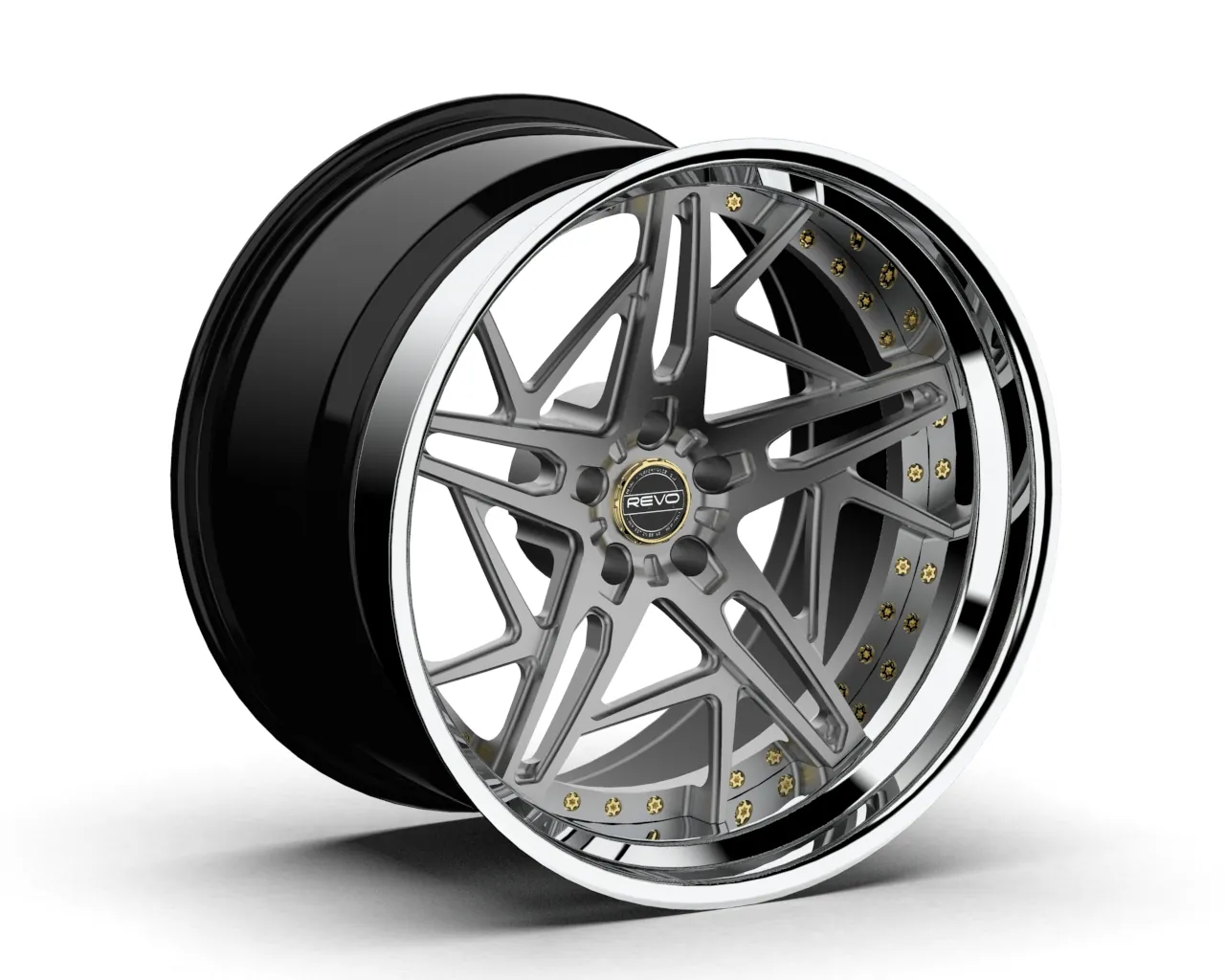
How REVO approaches a complete wheel specification
REVO builds the specification around the vehicle, not a generic catalog size. The exact year, make, model and trim create the starting point. Brake changes, suspension, tire plan, ride height, intended use and design direction complete the picture. That process gives center bore and mounting details their proper place inside a full wheel package.
Start with the REVO wheel collection to find a design direction, then compare the available construction options if you are deciding between a monoblock or modular build. When you are ready to define the vehicle details, use the fitment quote form. The goal is not just a wheel that looks right when parked. It is a wheel package that mounts, clears and drives as the build requires.
Frequently asked questions
Are hub-centric wheels better than lug-centric wheels?
Neither label replaces correct fitment, but a hub-centric interface gives the wheel a direct locating surface on the vehicle hub. A lug-centric wheel can be appropriate when the wheel manufacturer specifies that arrangement and the matching lug hardware and installation procedure are used. The important part is matching the wheel, hub, hardware and intended application as one system.
Do hub-centric rings carry the vehicle weight?
A hub ring is primarily a locating component. It fills the gap between a compatible oversized wheel bore and the vehicle hub so the wheel can center during installation. It does not correct a wrong bolt pattern, wrong lug seat, unsuitable load rating or insufficient brake clearance.
Can I use a wheel with a larger center bore than my hub?
A wheel bore can be larger than the vehicle hub when the wheel manufacturer approves the application and the required centering method is followed. A bore that is smaller than the hub will not mount correctly. Confirm the exact wheel bore, hub diameter, lug seat and supplied hardware before installation.
Will a missing hub ring cause vibration?
It can contribute to vibration when a wheel intended to be centered with a ring is installed without one, but vibration also has many other possible causes. Wheel balance, tire condition, road-force variation, debris on the mounting face, loose hardware and damaged components all need to be checked rather than assuming one part is the answer.
Do I still need to torque the lug nuts on a hub-centric wheel?
Yes. The wheel must still use the correct lug nuts or bolts, seat type and vehicle torque specification. Centering is only one part of the installation. Follow the vehicle and wheel manufacturer instructions, use a crisscross sequence and confirm the final torque with an accurate torque wrench.