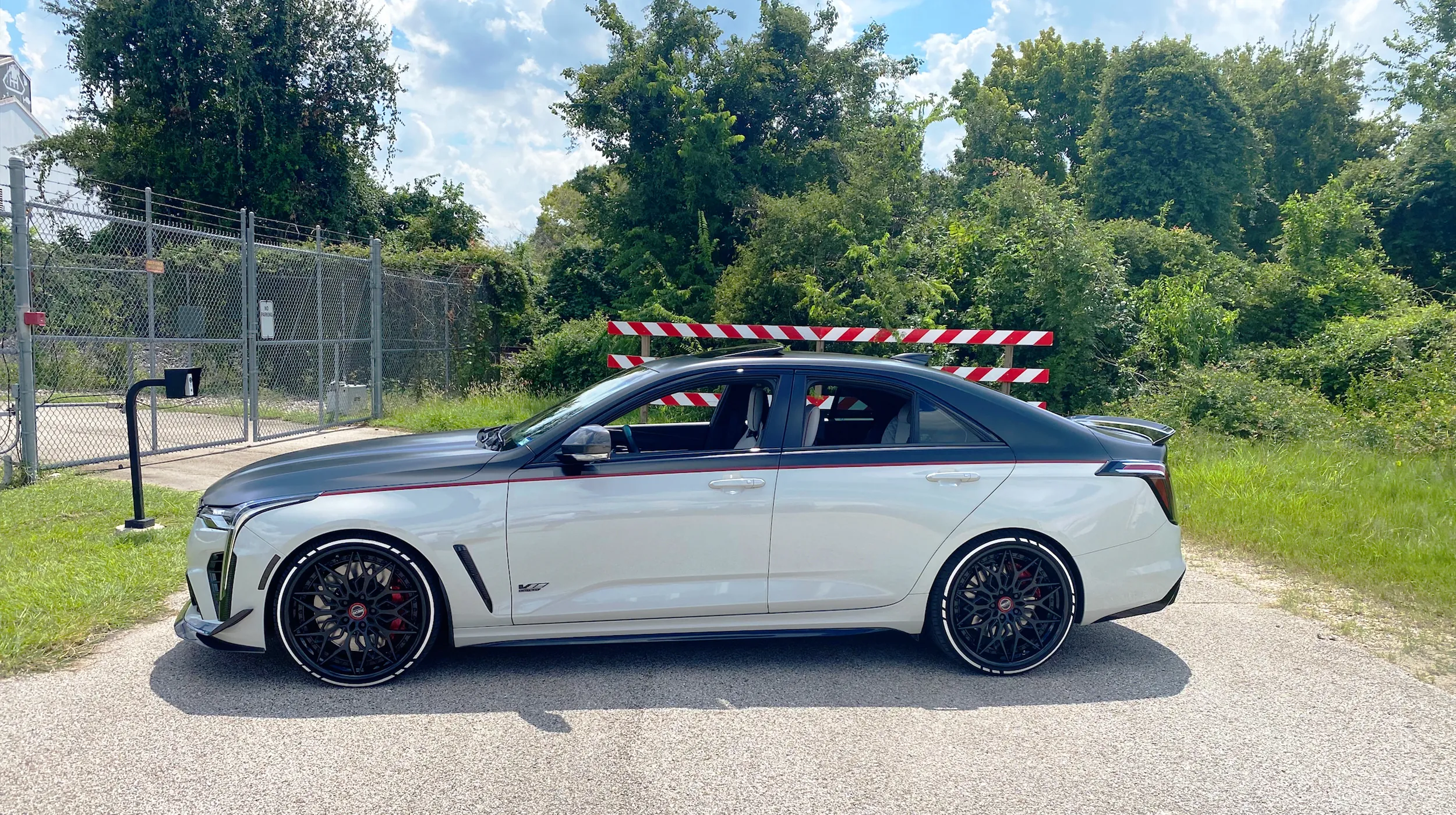
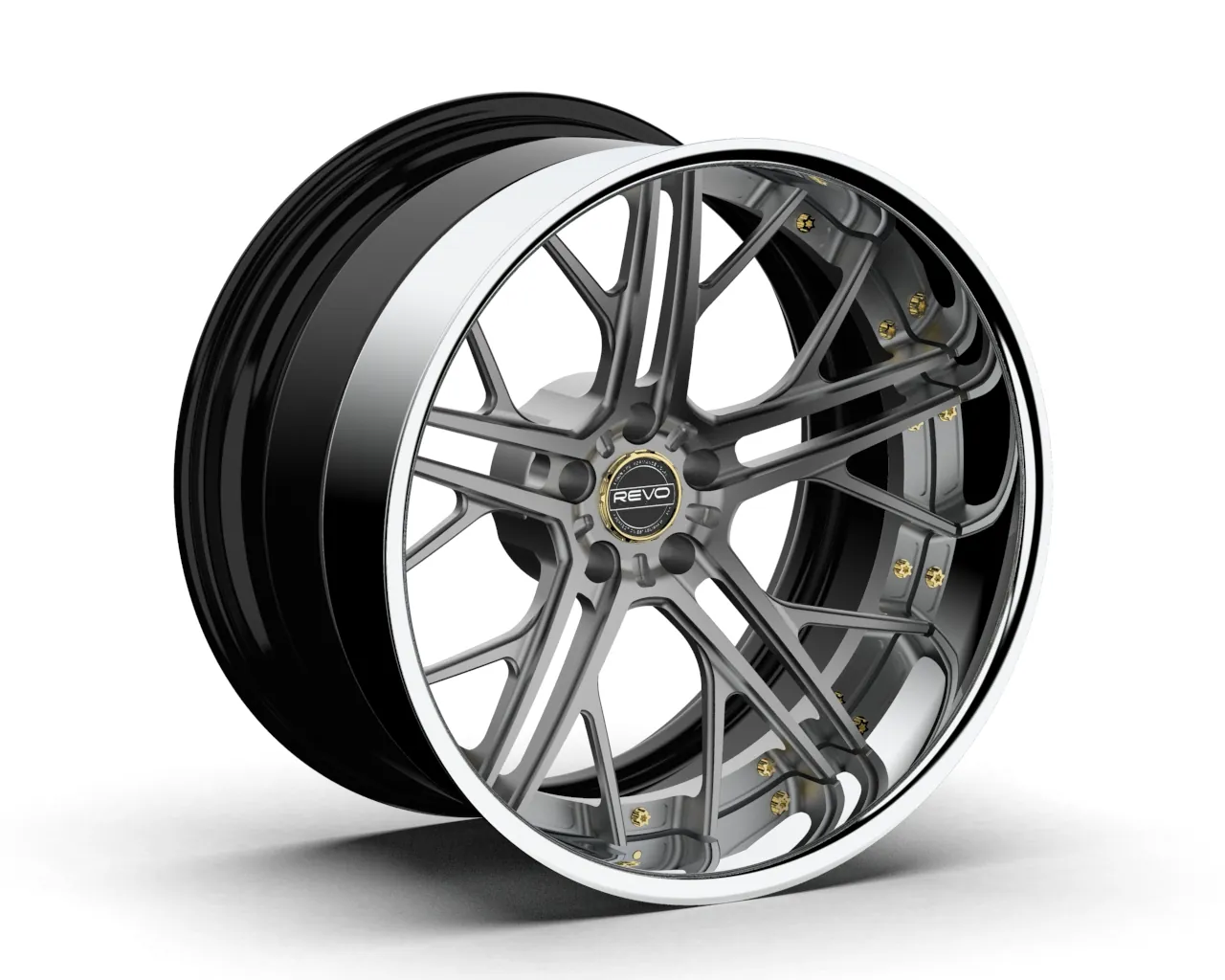
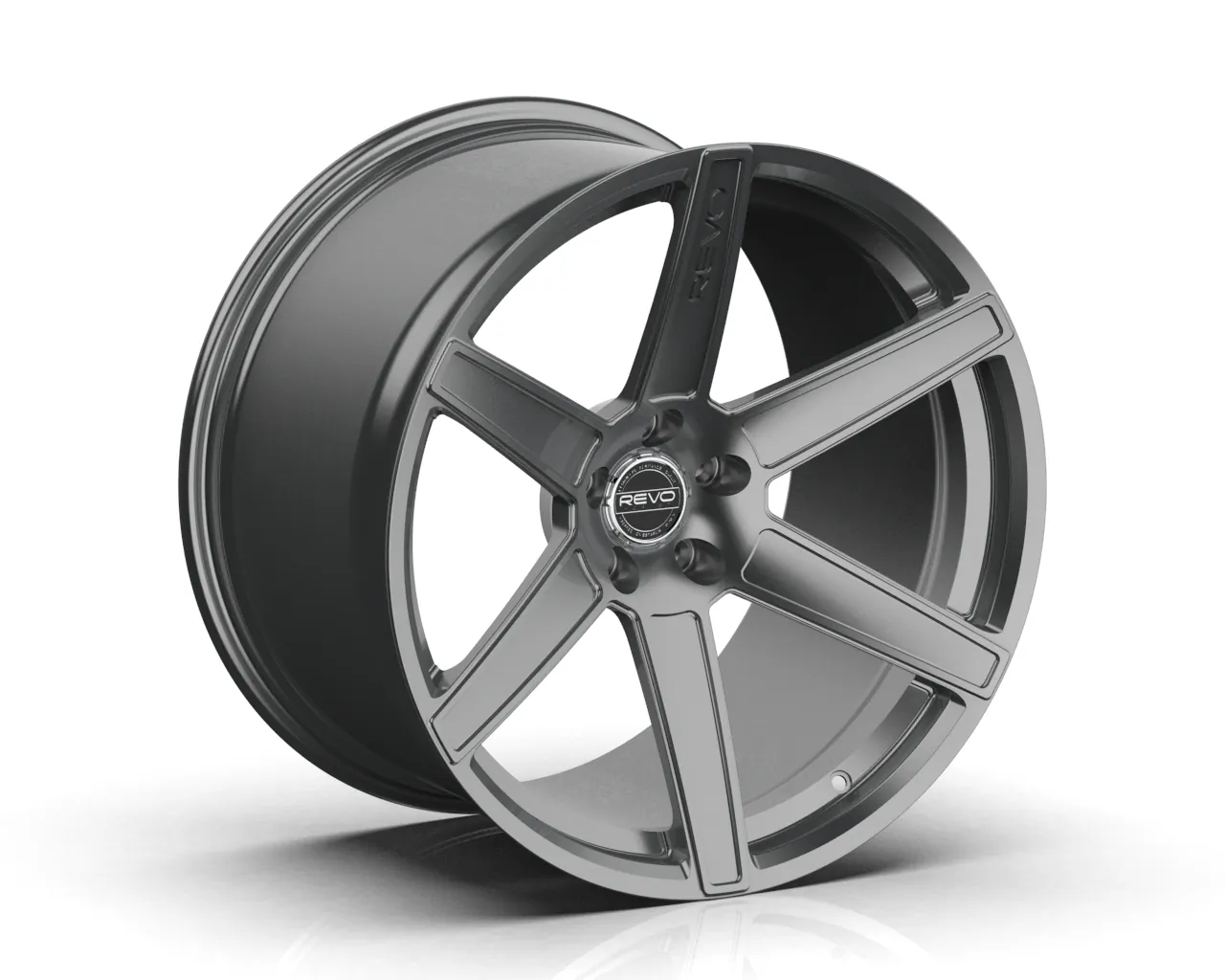
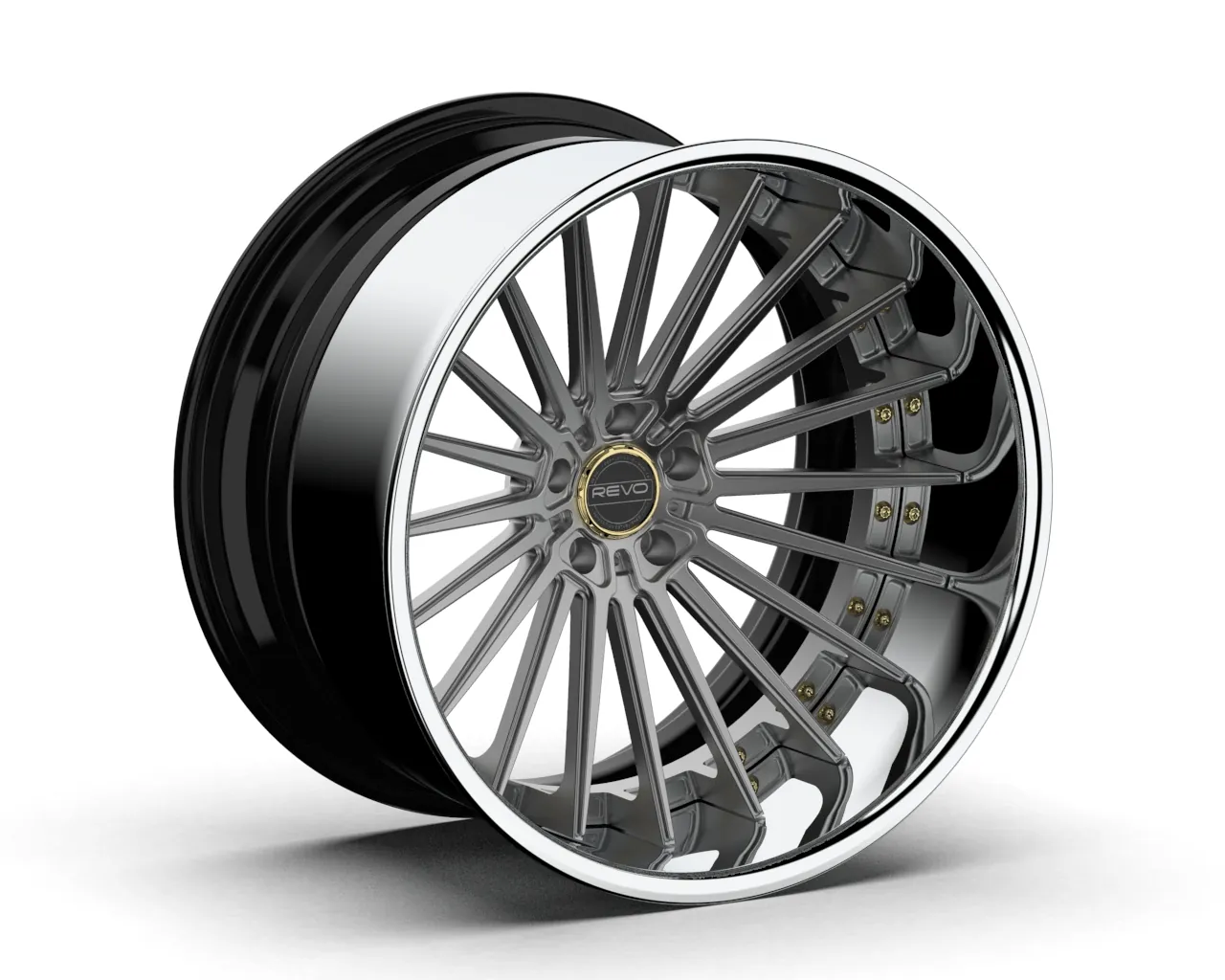
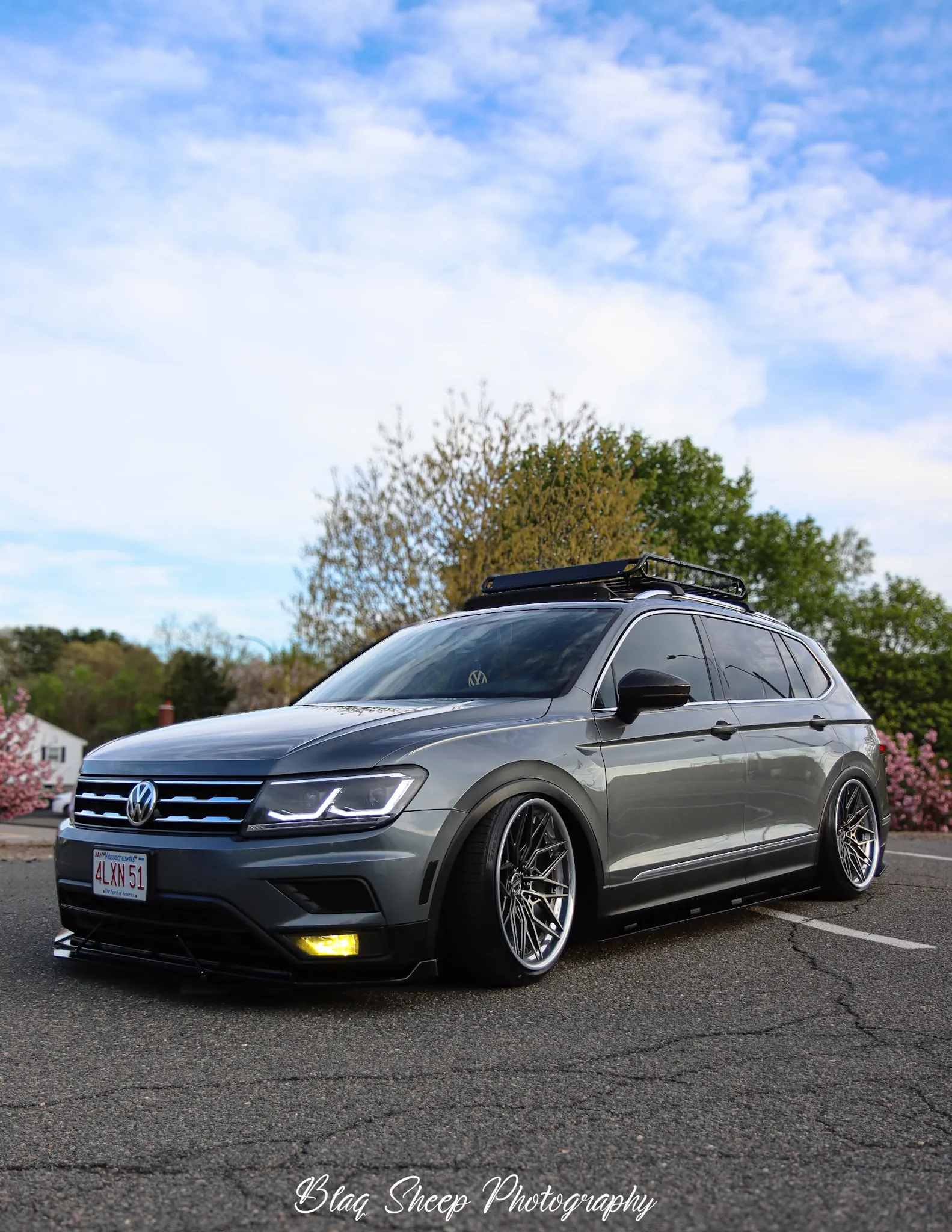
Forged aluminum wheels
Forged aluminum wheels built for your car.
Choose a REVO design, then shape the aluminum wheel, fitment, profile and finish around the car you actually drive.
A material with a job to do
Build the wheel around the car, then choose the right aluminum direction.
Forged aluminum gives a custom wheel a strong, precise foundation, but the material alone does not decide whether the finished set belongs on a vehicle. The brake package, tire sidewall, ride height and available space inside the arches all influence the dimensions and profile that make sense. A wheel has to look right in the driveway and work with the car through steering, suspension travel and the miles ahead.
REVO starts with those real conditions. The design gives the conversation a visual direction, then diameter, width, offset, face profile and finish are developed around the vehicle. The result is an aluminum forged wheel that is considered as part of the complete build, not a catalogue size with a different center cap or color.
Why forged aluminum?
A custom foundation for the proportions you want.
Aluminum forged wheels create a flexible starting point for a custom build, whether the finished direction is clean and integrated or more detailed and modular.
Specified around the brake package
An open five-spoke wheel, a dense mesh face and a deep concave profile each create different room behind the spokes. REVO works through the face profile and mounting details early, so the design that drew you in can support the hardware the vehicle actually carries.
Built for the whole stance
Wheel diameter, width and offset change the relationship between the tire, arch and body from every angle. The front and rear need to read as a complete set while preserving the room needed for turning, suspension movement and the tire plan.
Finished for the vehicle
Brushed, painted, polished and contrasting details all handle light differently. The final finish should work with the paint, trim, brake details and interior accents already on the car, so the wheel feels designed for the build rather than added afterward.
The details decide the result
Set the proportions before the wheel enters production.
Diameter sets the visual scale of the car and changes the amount of tire sidewall in the final picture. Width influences the relationship between the wheel and tire. Offset places the wheel face within the available space. Those choices affect whether a car reads as planted, restrained or aggressive, but they also need to leave room for the moving parts that make the vehicle usable.
Profile connects the wheel face to the hardware behind it. A deep concave face can create a strong sense of depth, while an open, flatter profile may provide a clearer view of the brake package. Neither approach is automatically right. The vehicle, brakes, tire plan and desired visual direction have to agree before a profile becomes the right answer.
Construction gives the specification another layer of choice. A one-piece aluminum forged wheel carries its face and barrel as one integrated form. Two-piece and three-piece directions introduce separate components that can create more latitude with lip, barrel, hardware and finish relationships. The purpose is not to add complexity for its own sake. It is to choose the construction that gives the vehicle the proportion and character the brief calls for.
REVO keeps those decisions in one conversation. A favorite wheel face can guide the first step, but the tire plan may change the desired width, brake clearance can affect the profile and ride height can redefine the wheel position. Treating each choice as connected produces an aluminum wheel package that feels resolved from the first look to the final drive.
Make the first conversation useful
Bring the car, the purpose and the direction you want to see.
You do not need a finished measurement sheet before reaching out. A clear picture of the vehicle and its intended use lets the fitment conversation become specific without forcing every decision too early.
The vehicle as it sits
Share the year, make, model and trim, plus brake, suspension or body changes. Accurate details create a real foundation for the first fitment direction.
The way it is driven
Daily miles, long road trips, performance use, track time and a show-focused build each create different priorities. Intended use gives the wheel and tire plan context.
The character you want
Choose a REVO design, save a reference image or describe the stance and finish in a few words. Clean, technical, motorsport, deep-lip and understated are useful starting points.
The first conversation should surface the questions that shape the finished set: does the brake package need a particular profile, will the tire plan move the ideal width, and should the front and rear carry different visual weight? Starting with the whole vehicle lets every aluminum wheel decision support the next one.
Frequently asked questions
Before you specify forged aluminum wheels.
What are forged aluminum wheels?
Forged aluminum wheels start as a solid aluminum forging that is machined into the finished wheel. At REVO, the material is part of a custom specification that also considers the vehicle, brake package, tire plan, wheel position, construction and finish.
Are forged aluminum wheels made for my vehicle?
The vehicle is the starting point. Share the year, make, model, brake details, suspension changes and tire direction so REVO can determine the diameter, width, offset and profile that fit the car rather than relying on a generic recommendation.
Can forged aluminum wheels clear large brakes?
They can when clearance is confirmed before the wheel is approved. Caliper shape, rotor diameter, wheel profile, spoke design and mounting details all affect the space behind the face. Include factory performance brakes, carbon-ceramic hardware or aftermarket calipers with a quote request.
Should I choose one-piece or multi-piece forged aluminum wheels?
A one-piece wheel suits a clean, integrated form. Two-piece and three-piece construction create more freedom to tune the center, barrel, lip and hardware relationship. The right direction depends on the vehicle, the fitment envelope and the finished result you want.
How long does a custom REVO aluminum wheel build take?
REVO estimates 10 to 12 weeks for standard finishes and 12 to 14 weeks for custom finishes, measured from agreement. The team can confirm the appropriate timing once the wheel specification and finish direction are settled.