
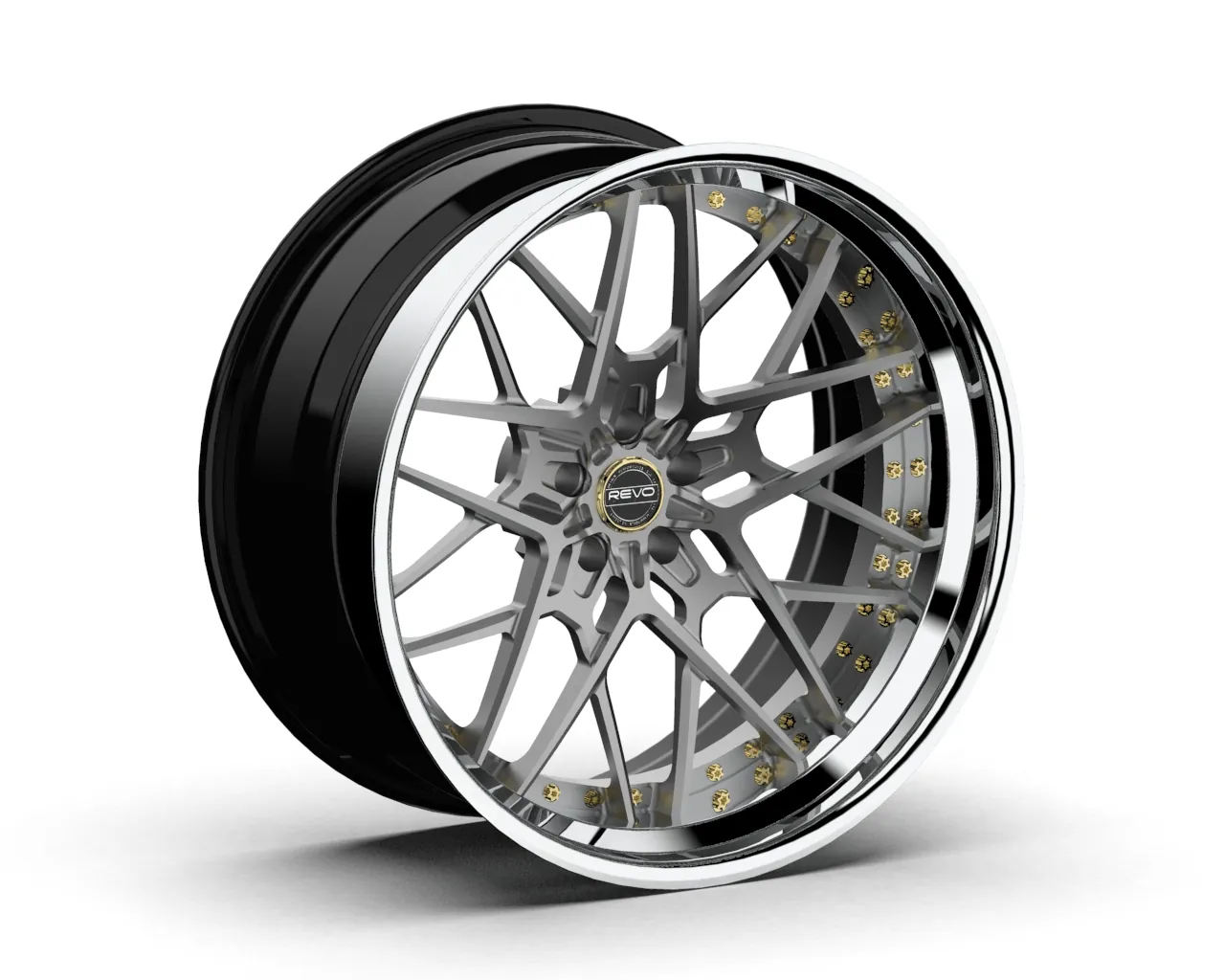
Choosing between a one-piece wheel and a three-piece wheel is not really a contest between a practical option and a show option. Both can be beautifully engineered, both can be made for serious performance, and both can transform the stance of a car. The real question is simpler: what does your build need the wheel to do?
Some cars need a clean, integrated wheel that keeps ownership uncomplicated and the visual read tight. Others need a specific width, offset, lip profile or brake clearance that is hard to reach with a fixed construction. Once you see the decision through those jobs, the choice becomes far less mysterious.
This guide breaks down what changes with each construction, where the tradeoffs show up in the real world, and how to start a custom wheel conversation with useful information instead of a list of guesses.
Start with the construction, not the finish
A one-piece wheel, often called a monoblock wheel, combines the center section and barrel into one continuous structure. The wheel may be cast, flow formed or forged, so construction count and manufacturing method are separate decisions. A one-piece forged wheel is still one piece, but it begins with a forged blank that is machined into its final shape.
A three-piece wheel uses a center section with separate inner and outer barrel sections. The parts are joined as an assembly, which gives the builder more ways to tune width, offset and lip proportions. APEX's construction overview is a helpful visual explanation of how the center and barrel sections differ across the common one-, two- and three-piece layouts.
That is the key distinction. A one-piece wheel starts with an integrated package. A three-piece wheel starts with a system of components. Neither says enough by itself about quality, strength or suitability. The design, materials, engineering, load needs, wheel size and how the wheel will be used all matter.
What a one-piece wheel does well
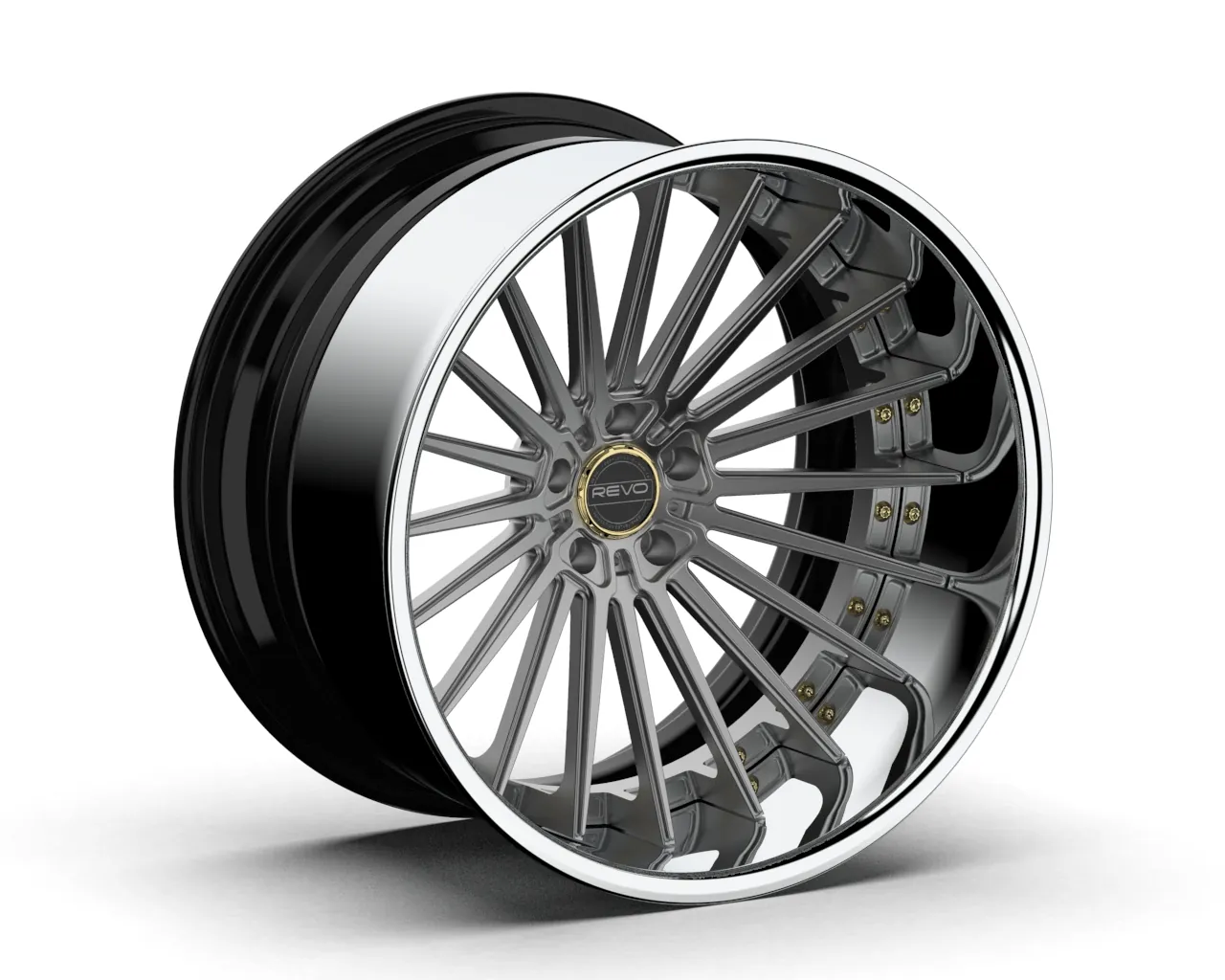
One-piece wheels make sense when the target fitment is known and the priority is a direct, cohesive wheel design. Because the barrel and center are part of one structure, there are no assembly joints or exposed hardware to consider in normal ownership. That is appealing for daily-driven performance cars, clean modern builds and owners who want a wheel that looks intentional without adding extra service considerations.
For a forged one-piece wheel, the integrated construction can also give designers a strong platform for managing stiffness, spoke shape and weight. That does not mean every one-piece wheel is light or every three-piece wheel is heavy. It means a well-executed monoblock design can focus its material and geometry around a single finished fitment rather than a set of joining interfaces.
There is also a visual reason. A one-piece wheel can make the face, spoke transitions and rim edge read as one continuous form. On a car with sharp body lines, a restrained finish or an aggressive modern stance, that uninterrupted shape often feels exactly right. It is a more deliberate look than a wheel with visible fasteners, not a lesser one.
The tradeoff is flexibility. Once a one-piece wheel is specified, its width, offset and lip shape are fixed. The right answer is to get the fitment right before the wheel is made, not to expect the wheel to adapt after the fact. Vehicle-specific references like APEX's wheel and tire fitment guides show why a fitment recommendation changes with the chassis, brake package, tire size and intended use.
What a three-piece wheel does well
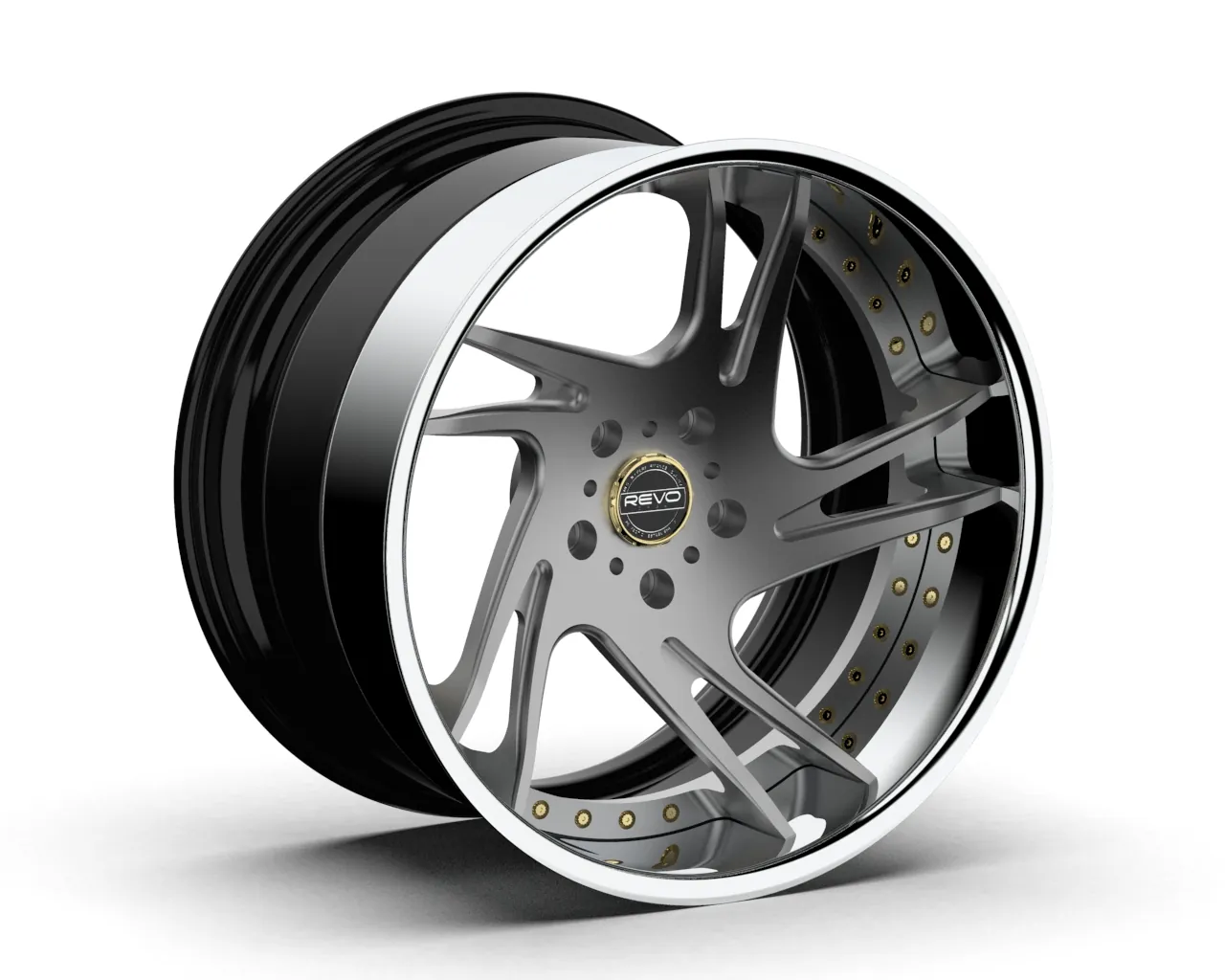
Three-piece wheels earn their place when the build needs a more tailored answer. A separate center, inner barrel and outer barrel allow a builder to work toward a specific width, offset, brake clearance and lip proportion. That is useful when the car has been lowered, widened, heavily modified or simply needs a stance that off-the-shelf dimensions cannot deliver cleanly.
That flexibility has a visual side as well. The same basic face can take on a different personality with a deeper outer lip, a different barrel finish or a more pronounced stagger between front and rear. On a car where wheel fitment is part of the whole composition, the ability to tune those relationships can be the difference between a set that merely fits and a set that belongs.
Modular construction can also make some forms of service more practical. A damaged section may be assessable on its own rather than making the entire wheel an automatic write-off. Forgeline notes that its three-piece wheels can often be repaired for less than replacement, but that is a manufacturer-specific service claim, not a promise for every damaged wheel or every brand. The right move after an impact is inspection, not optimism. See Forgeline's repair guidance for an example of how a specialist approaches that conversation.
The tradeoff is that an assembled wheel deserves more attention. Hardware, sealing surfaces and assembly specifications are part of the product. A three-piece wheel is not fragile by definition, but it is not a fit-and-forget object either. The hardware guidance published for modular wheels, such as Forgeline's recommended torque note for a specific ARP bolt configuration, illustrates why owners should follow the exact instructions from their own wheel manufacturer rather than borrowing a number from a forum.
Fitment is where the decision gets real
Wheel construction should never be chosen in isolation. Before a wheel can look right, it has to clear the brakes, suspension and bodywork while supporting the intended tire. Diameter, width, offset, center bore, bolt pattern, brake profile and load requirements all belong in the same conversation. A dramatic lip is irrelevant if the wheel does not clear the caliper. A lightweight design is irrelevant if the tire plan creates rubbing or compromises the way the car drives.
Offset and backspacing are especially important because they determine where the wheel sits relative to the hub. Moving the wheel outward changes fender clearance. Moving it inward changes strut, control arm and brake clearance. Changing width affects both sides. That is why two wheels with the same diameter can behave very differently on the same car.
For a stock street car, a one-piece wheel may be ideal because the target dimensions are familiar and repeatable. For a custom-body car, a wide rear setup, a big-brake conversion or a build that needs a precise outer lip, three-piece construction can give the builder more room to tune the package. The construction does not replace a fitment plan. It gives the plan more or fewer adjustment points.
Tire choice belongs in that same plan. The National Highway Traffic Safety Administration's tire safety guidance is a useful reminder that traction, temperature capability and load considerations are functional safety matters, not cosmetic details. A wheel should be specified alongside the tire and the vehicle's real use, whether that is daily commuting, weekend canyon driving, track work or a truck carrying real weight.
Weight and strength: avoid the easy assumptions
It is tempting to say one-piece wheels are always lighter or three-piece wheels are always stronger. Neither shortcut holds up. A wheel's final weight and strength depend on its manufacturing process, alloy, dimensions, spoke geometry, barrel design, hardware, engineering targets and load rating. The number of pieces is only one part of the equation.
A one-piece forged wheel can be an excellent choice when low weight and integrated stiffness are the priority. A purpose-built three-piece forged wheel can also be a serious performance component, especially when its modular fitment allows the right tire, clearance and track width for the car. The smarter question is not "Which construction wins?" It is "Which complete wheel specification suits this chassis and this job?"
That question gets more important as the vehicle gets heavier or the use gets harder. For truck and SUV owners, wheel and tire selection needs to respect the real loads the vehicle will see. NHTSA test guidance repeatedly treats tire, axle and vehicle load ratings as values that must not be exceeded, which is the right mindset even when a wheel purchase starts with a visual goal. Its load-rating test procedure makes that relationship explicit.
Ask the wheel builder what the proposed specification is designed to support. Share the vehicle, use case and tire plan. A good recommendation is based on the actual car, not a generic promise that one construction is universally superior.
Maintenance and ownership are part of the choice
One-piece wheels are often easier to live with because the wheel is a single finished structure. Cleaning is simpler around the rim edge, there are fewer details to inspect and the everyday routine is more familiar. That is a real benefit for a daily driver, especially in climates with rough roads, winter grime or frequent brake dust.
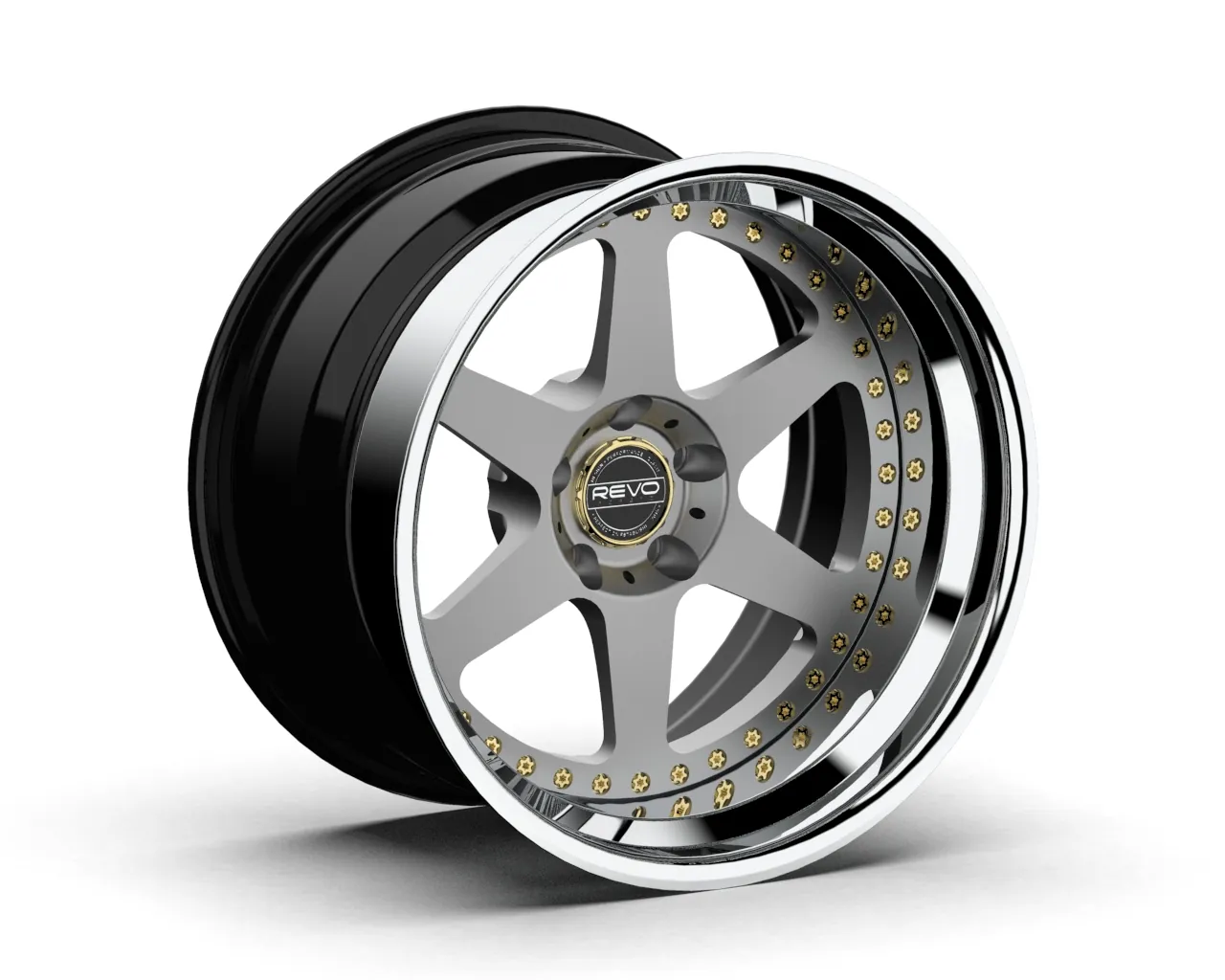
Three-piece wheels ask for a little more involvement. Exposed hardware can create a distinct visual signature, but it also adds places where dirt collects. Depending on the construction, the owner may need to watch assembly hardware and sealing surfaces as part of regular care. That is not a reason to avoid three-piece wheels. It is a reason to choose them because their flexibility and appearance are worth that ownership style for your build.
For either type, proper installation matters. Use the wheel maker's hardware recommendations, the vehicle maker's lug torque specification and a fitment process that confirms clearance through steering and suspension travel. Inspect after a meaningful impact. Keep tires inflated correctly. Do not treat a vibration, rubbing sound or loss of pressure as a cosmetic issue to put off until later.
Finish care matters too. Polished lips, brushed faces, colored centers and machined details all have different cleaning needs. Choose a finish you will actually enjoy maintaining. A wheel that looks perfect on delivery but feels like a chore after two weeks is not the right luxury.
Cost is about the complete specification
Three-piece wheels are often associated with a higher price because modular construction can involve more parts, more machining and more assembly work. That can be true, but it is not a complete way to judge value. A one-piece forged wheel can also be a premium component when its engineering, material, machining time and finish are specified for a demanding car.
The right comparison is the complete wheel package. Ask what construction is being proposed, what dimensions it supports, what finish work is included, what service is available after delivery and whether the wheel is designed around the vehicle's actual use. A lower initial price is not a win if the fitment is compromised, the finish does not suit the environment or the wheel cannot meet the loads the car will see.
For a custom project, a three-piece wheel can be worth the additional investment when it solves a specific dimensional problem or creates a proportion that makes the whole car read correctly. For a street-driven car with a known fitment target, a one-piece forged wheel may deliver the cleaner ownership experience and the exact visual result the owner wants. Both are good value when the specification has a purpose.
Be cautious with comparisons that promise a universal winner on price, strength or repairability. Wheel decisions are not a shopping-cart checkbox. A high-end set is a combination of design, dimensions, tire choice, finishing details and the fitment work behind it. The construction should support that complete package, not become a status label that overrides the needs of the car.
Questions that save a custom build from bad fitment
Before choosing a construction, collect the details a wheel specialist needs to make a good call. The vehicle year, make, model and trim are the starting point, but they are not enough on their own. Brake upgrades can change spoke-clearance requirements. Coilovers, air suspension and lowered ride height can change inner clearance. Wide-body work can transform the outer space available at the fender. Even the tire brand and intended sidewall profile can influence whether a package works as planned.
It also helps to decide what kind of fitment you actually want. Do you want a conservative street setup with reliable clearance at full lock and full suspension travel? Do you want a flush stance that fills the arches without rubbing? Are you working toward a motorsport-oriented tire width and brake package? Or is the priority a period-correct deep-lip look on a show build? Each answer pushes the dimensions in a different direction.
Photos help, but measurements and real vehicle details help more. A reference image can show the attitude you are after. It cannot confirm caliper clearance, hub registration, suspension movement or tire clearance. Treat the photo as a design brief, then let the engineering work happen around the actual car.
This is where a modular three-piece wheel can be powerful, because it offers more ways to resolve the dimensions. It is also where a one-piece wheel can be exceptionally satisfying, because once the right specification is confirmed the finished wheel has a clean, unified simplicity. The better the information at the start, the more confidently either construction can be specified.
Do not confuse construction with style
A three-piece wheel can look subtle. A one-piece wheel can look dramatic. Construction does not dictate whether a wheel is classic, technical, motorsport-inspired, luxury-focused or aggressive. Those qualities come from the face design, spoke count, concavity, finish, hardware treatment and how the wheel sits under the car.
That is useful because it frees you to make the decision in the right order. First, decide what the car needs from fitment and use. Then choose the construction that supports it. Finally, choose the design language that makes the vehicle feel finished. Starting with the finish is fun, but it should be the last decision that locks the package together.
For example, a clean satin wheel with a technical multi-spoke face may be ideal as a one-piece design on a modern performance sedan. A classic coupe with a wider rear stance may come alive with a three-piece setup that uses separate barrel proportions to shape the silhouette. Neither approach is more authentic. The wheel should make sense for the car in front of it.
Choose one-piece when this sounds like your build
- You have a well-understood fitment target and do not need modular adjustment.
- You want a clean, integrated wheel design with a cohesive visual read.
- You value straightforward daily ownership and minimal assembly-specific maintenance.
- Your build is performance-focused and the right one-piece forged specification is available for the car.
- You want the decision to center on spoke design, concavity, finish and fitment rather than exposed hardware.
A one-piece wheel is not the conservative choice. On the right car, it is the more focused choice. The geometry can be crisp, the concavity can be aggressive and the finish can still carry plenty of personality. It simply puts the visual energy into the whole form rather than the modular construction.
Choose three-piece when this sounds like your build
- You need a highly tailored width, offset, lip profile or brake-clearance package.
- You are building around a custom body, a wide tire plan or a modified suspension setup.
- You want the visual character of separate barrels, visible hardware or a more pronounced lip.
- You value the possibility of serviceable components when a wheel section is damaged.
- You are comfortable following the care and inspection guidance that comes with an assembled wheel.
Three-piece construction is the better answer when the fitment itself is the feature. It gives a builder more control over the dimensions that define stance and proportion. That freedom needs careful specification, but when the details are right it creates a wheel package that cannot be faked with a generic size chart.
A simple way to make the call
Start with the non-negotiables. List the vehicle, modifications, tire plan and the way the car will be used. Then decide whether the fitment target is conventional or highly specific. If the right dimensions are straightforward and the visual direction is about a clean, integrated form, a one-piece forged wheel is usually the natural starting point. If the project needs exact barrel proportions, an unusual offset, a deep outer lip or a custom solution around brakes and bodywork, three-piece construction deserves the first conversation.
Next, think about ownership. Ask yourself whether you want the simplicity of one finished wheel or you genuinely value the modular character of an assembled wheel enough to keep up with its care guidance. Neither answer is more serious. The best wheel is the one that fits the car, supports the use and still feels right every time you walk back to it.
Finally, keep the decision tied to the full build rather than a single detail. A beautiful face with the wrong tire fitment will not improve the car. A deep lip that forces compromises in clearance will not stay satisfying for long. Give the construction choice its proper job: it is the foundation that lets the design, stance and driving experience work together.
That approach also keeps the conversation useful when the project evolves. If the car later gets larger brakes, different tires or a suspension change, the original fitment assumptions can be revisited before a wheel is ordered. Good wheel choices are specific, and specificity is what makes a custom set feel effortless once it is on the car.
How REVO helps you get the specification right
REVO builds custom forged wheels around the car, not around a generic catalogue fitment. Start by exploring the wheel collection to find a design direction, then bring the practical details: vehicle year, make, model, brake changes, suspension changes, tire plan and how you want the car to sit.
From there, construction, diameter, width, offset, spoke profile and finish can work as one decision. A clean one-piece look, a deep-lip three-piece direction, a track-minded spec or a tailored truck fitment all start with the same discipline: understand the car before finalizing the wheel.
When you are ready to talk through the build, use the fitment quote form. The more useful detail you share at the beginning, the better the final wheel can serve the way you actually drive.
Frequently asked questions
Are three-piece wheels better than one-piece wheels?
Neither construction is automatically better. A three-piece wheel is the stronger choice when exact width, offset and lip proportions are central to the build. A one-piece forged wheel is usually the simpler choice when low weight, straightforward ownership and a clean integrated look matter most.
Do three-piece wheels need more maintenance?
They can. A modular wheel has assembly hardware and sealing surfaces that deserve routine inspection, especially after a hard impact or when the wheel is used in demanding conditions. Follow the wheel maker's service guidance rather than treating every three-piece design the same.
Are one-piece forged wheels good for daily driving?
Yes. A well-specified one-piece forged wheel is a strong fit for many street-driven cars because the construction is simple, the design is integrated and there are fewer assembly details to manage. Correct load rating, tire choice, clearance and installation still matter more than the label alone.
Can a three-piece wheel be repaired?
A three-piece wheel can be advantageous when a damaged barrel or outer section is serviceable, because the center and other sections may not need replacement. Whether repair is appropriate depends on the location and severity of the damage, so it should be assessed by the manufacturer or a qualified wheel repair specialist.
What information should I have before ordering custom forged wheels?
Start with the vehicle year, make, model and trim, plus brake changes, suspension changes, tire plan, intended use and the look you want. Those details let a fitment specialist balance clearance, load needs, spoke profile, concavity and finish without guessing.